With each passing year, the world witnesses a huge drop in raw materials such as fossil fuels, earth metals, and freshwater, which has set in motion geopolitical conflicts and economic instability. This brings the circular economy into action both as a cardinal change and as an alternative approach to the traditional method of mitigating climate change.
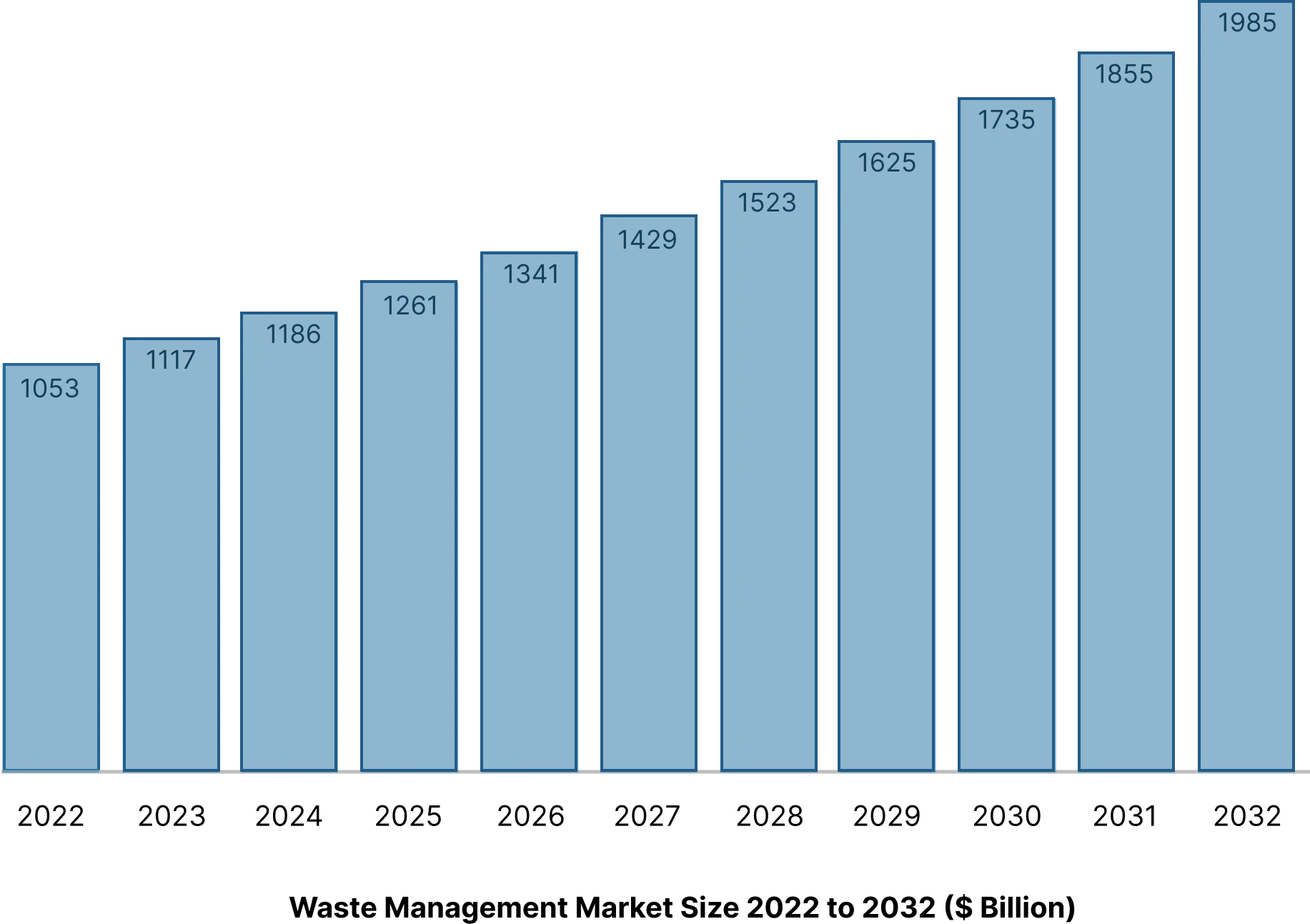
Circular economy is described as a system where used products never go to waste since they are reused, repaired, refurbished, remanufactured, recycled, and composted. As opposed to the linear economy, where products made from raw materials are thrown away as waste, the circular economy does not let waste get generated to begin with. In a nutshell, the circular economy facilitates dealing with various global challenges that include but are not confined to climate change, pollution, waste, and loss of biodiversity. As reported, in 2022, the estimated global waste management market size was USD 1,052.58 billion, which is predicted to reach about USD 1,985.06 billion by the year 2032. It was set to grow at a CAGR of 6.60% from the year 2023 to 2032.
The model of circular economy consists of three main principles, i.e., reduce, reuse, and recycle. Let’s understand what role all these sections play and how.
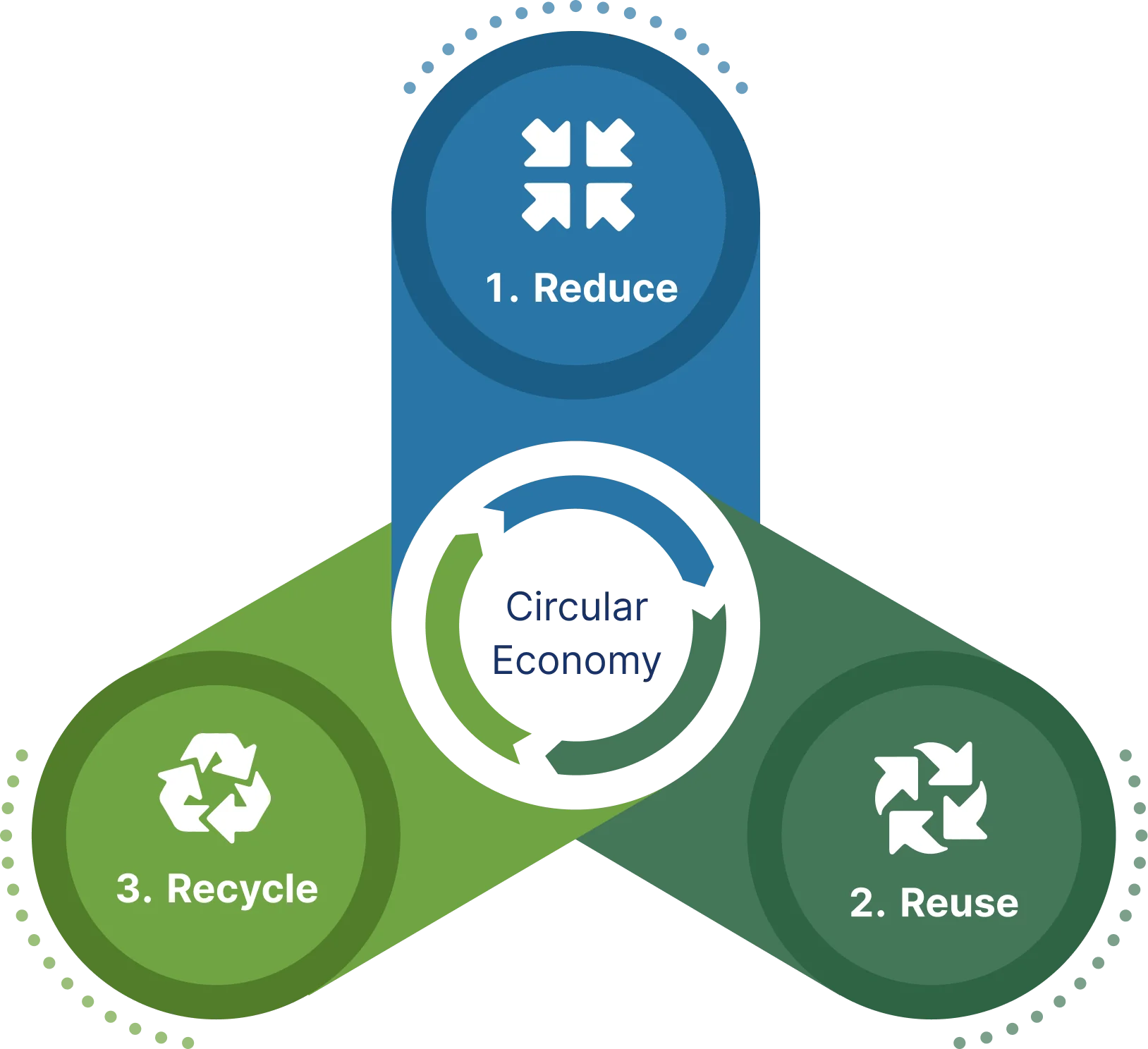
Using minimal resources produces minimal waste right from the manufacturing stage. This means making use of fewer raw materials and devising a product that mitigates the impact the production of the product will have on the environment.
Circular economy waste management is incomplete without the stage of reuse, since it increases the product's longevity by repairing or refurbishing it. It leads to negligible waste generation while also lowering the demand for new products, which consequently saves energy and resources.
Waste products are recycled to produce new products, which enables the resources to circulate within the economy. Waste is also upcycled to create a completely new product from the waste’s current form. With recycling/upcycling, not only does the demand for raw materials diminish, but the greenhouse gas emissions also get controlled, and energy is conserved at the same time.
Due to the increased acidity of the ocean, the ocean chemistry experiences massive changes that adversely affect not just aquatic beings but also the human population.

Enter Subheading para
Due to the increased acidity of the ocean, the ocean chemistry experiences massive changes that adversely affect not just aquatic beings but also the human population.

Enter Subheading para
The concept of circular economy is extremely bold, but it carries with it noteworthy challenges as well. Some would say it is not achievable, but the current scenario of the Earth impels us to move forward with the circular economy on a global scale. The configuration of economic actions with ecological conservation is the need of the hour. The world is moving towards a future where the circular economy is not only favored but also intended. It has become a critical requirement to incorporate the circular economy into business models that are backed by innovation and regulatory standards. Back in November 2022, the European Commission came up with new EU-wide guidelines on packaging that intend to mitigate packaging waste while simultaneously enhancing the design of packaging, for instance, clear labeling that endorses reusing and recycling, and demands a switch to biodegradable, bio-based, and compostable plastics. If we talk about Finland in particular, it is the first country to have published its circular economy roadmap. The country has set up many notable initiatives to advocate resource efficiency, waste reduction, and sustainable design. Likewise, Germany’s efforts towards a circular economy involve establishing laudable waste segregation and recycling initiatives.

Adoption of the circular economy around the world will be profitable to businesses in various ways. However, the topmost benefits have been listed below.

Due to the increased acidity of the ocean, the ocean chemistry experiences massive changes that adversely affect not just aquatic beings but also the human population.
The positive alliance of technological, economic, and social factors will be extremely expedient to speed up the evolution from the linear model to the circular model of consumption. The prevalent task now is to let the circular economy take center stage and climb new heights. This is where Cognitud's sustainability advisors excel, as they possess the precise knowledge and experience necessary in the current global sustainability landscape.
Cognitud's sustainability consultants work closely with businesses to develop policies that prioritize sustainability while maintaining profitability. Our sustainability experts analyze the current operational process of a company to consequently provide solutions that aid in not just business operations but also its expansion while paying much heed to the impact it has on the environment.
To be specific, our experts will engage in the company’s current linear model assessment to determine the areas for circularity. They will then devise a circular economy strategy tailored to the company's needs. This strategy could involve initiatives ranging from reducing waste generation to optimizing energy use.
Thereafter, our experts establish specific, measurable, achievable, relevant, and time-bound (SMART) circular economy goals. They will also team up with designers to integrate circular design values into new product development while also considering the usage of sustainable packaging materials.
After implementing many circularity-centric practices, our sustainability professionals monitor key performance indicators (KPIs) and track progress to be able to refine the strategies in the future.


Nilanjana Bhowmick
Position your organization with strategies built around your industry realities.
A circular economy is a system where products and materials are reused, repaired, refurbished, remanufactured, recycled, and composted, preventing waste generation and reducing reliance on raw materials, unlike the traditional linear economy.
Practices like reducing resource use during production, reusing products through repair or refurbishment, and recycling or upcycling materials to create new products support a circular economy.
A circular economy works by designing products and processes to minimize resource consumption, extend product life through reuse, and reintegrate waste materials into the production cycle through recycling and upcycling.
The circular economy contributes to sustainability by reducing greenhouse gas emissions, conserving natural resources, minimizing waste, and promoting economic growth through innovation and resource efficiency.
Yes, a circular economy is possible, as demonstrated by various global initiatives and policies promoting waste reduction, resource efficiency, and sustainable design, though widespread adoption requires overcoming economic and regulatory challenges.