

29 July 2026
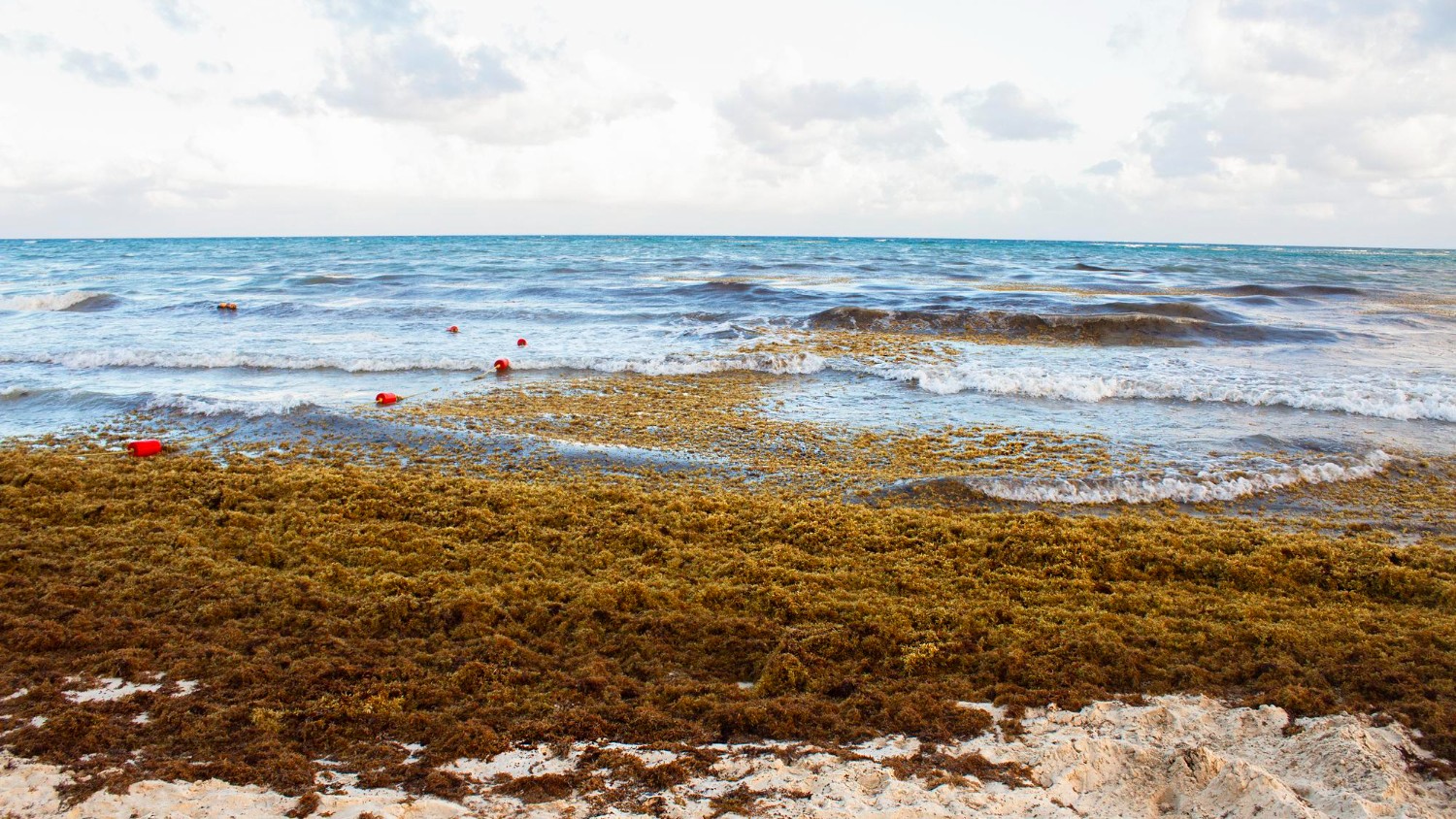
Mexico’s Caribbean coast is facing an unprecedented sargassum influx, with record volumes of the brown seaweed threatening tourism, coastal ecosystems, and local economies across Quintana Roo. Authorities expect approximately 119,000 tons to wash ashore by the end of 2026, surpassing last year’s record of 96,000 tons.
The buildup is already affecting major destinations including Cancún, Playa del Carmen, and Tulum, where dozens of beaches have faced red alerts or temporary closures. In late June, 92.5% of Quintana Roo’s beaches recorded excessive sargassum levels. Local officials and tourism businesses say the situation is worsening an already challenging low season, with the state estimating that managing the problem costs around $2 billion annually, equivalent to roughly 11% of its GDP.
The environmental consequences extend beyond tourism. As sargassum decomposes, it can block sunlight from reaching underwater vegetation, reduce marine biodiversity, and release arsenic and other heavy metals into coastal sediments. Workers involved in removing the seaweed have also reported health effects including skin irritation, headaches, fatigue, and nausea.
Mexico’s Navy has deployed 11 specialized coastal vessels, 18 support boats, an amphibious collector, two barges, and four drones, alongside more than 9,000 meters of containment barriers. However, scientists argue that beach cleanup alone cannot address a phenomenon increasingly linked to warmer ocean temperatures, nutrient availability, and prolonged sunlight.
The federal government is expected to unveil a revised response plan on July 30, with researchers calling for stronger use of satellite monitoring and forecasting to enable earlier, targeted intervention before sargassum reaches shore.
For Mexico’s Caribbean, the challenge is increasingly about protecting both a critical tourism economy and the ecological health of its coastal waters.
Sargassum surges are becoming a formal physical-climate-risk exposure for coastal tourism and hospitality operators, and TNFD is starting to formalise these ocean-linked risks into disclosable financial issues. Our nature-based-solutions and impact-assessment teams help clients quantify marine and coastal physical risk and align disclosure with international frameworks.

• 𝘛𝘩𝘦 𝘜𝘈𝘌 𝘍𝘰𝘰𝘥 𝘉𝘢𝘯𝘬 𝘢𝘯𝘥 𝘋𝘶𝘣𝘢𝘪’𝘴 𝘊𝘰𝘮𝘮𝘶𝘯𝘪𝘵𝘺 𝘋𝘦𝘷𝘦𝘭𝘰𝘱𝘮𝘦𝘯𝘵 𝘈𝘶𝘵𝘩𝘰𝘳𝘪𝘵𝘺 (𝘊𝘋𝘈) 𝘩𝘢𝘷𝘦 𝘴𝘪𝘨𝘯𝘦𝘥 𝘢𝘯 𝘢𝘨𝘳𝘦𝘦𝘮𝘦𝘯𝘵 𝘵𝘰 𝘤𝘰𝘭𝘭𝘦𝘤𝘵 𝘢𝘯𝘥 𝘳𝘦𝘥𝘪𝘴𝘵𝘳𝘪𝘣𝘶𝘵𝘦 𝘴𝘶𝘳𝘱𝘭𝘶𝘴 𝘧𝘰𝘰𝘥 𝘧𝘳𝘰𝘮 𝘸𝘦𝘥𝘥𝘪𝘯𝘨𝘴 𝘢𝘯𝘥 𝘦𝘷𝘦𝘯𝘵𝘴. • 𝘛𝘩𝘦 𝘪𝘯𝘪𝘵𝘪𝘢𝘵𝘪𝘷𝘦 𝘸𝘪𝘭𝘭 𝘧𝘰𝘭𝘭𝘰𝘸 𝘢𝘱𝘱𝘳𝘰𝘷𝘦𝘥…

<ul><li><i>India’s rooftop solar capacity reached 30.7 GW in July 2026, increasing the need for better grid management and flexibility.</i></li><li><i>Kerala and Maharashtra are exploring battery ener…

• 𝘛𝘩𝘦 𝘌𝘐𝘉 𝘎𝘳𝘰𝘶𝘱 𝘱𝘭𝘢𝘯𝘴 𝘵𝘰 𝘱𝘳𝘰𝘷𝘪𝘥𝘦 𝘢𝘵 𝘭𝘦𝘢𝘴𝘵 €30 𝘣𝘪𝘭𝘭𝘪𝘰𝘯 𝘧𝘰𝘳 𝘤𝘭𝘪𝘮𝘢𝘵𝘦 𝘢𝘥𝘢𝘱𝘵𝘢𝘵𝘪𝘰𝘯 𝘣𝘦𝘵𝘸𝘦𝘦𝘯 2026 𝘢𝘯𝘥 2030. • 𝘛𝘩𝘦 𝘯𝘦𝘸 𝘵𝘢𝘳𝘨𝘦𝘵 𝘥𝘰𝘶𝘣𝘭𝘦𝘴 𝘢𝘥𝘢𝘱𝘵𝘢𝘵𝘪𝘰𝘯 𝘧𝘪𝘯𝘢𝘯𝘤𝘪𝘯𝘨 𝘤𝘰𝘮𝘱𝘢𝘳𝘦𝘥 𝘸𝘪𝘵𝘩 𝘵𝘩𝘦 𝘱𝘳𝘦𝘷𝘪𝘰𝘶𝘴 𝘧𝘪𝘷𝘦-𝘺𝘦𝘢𝘳 𝘱𝘦𝘳𝘪𝘰𝘥. • 𝘍𝘶𝘯𝘥𝘪𝘯𝘨…