- Union Cabinet approves the third phase of the Green Energy Corridor programme.
- The scheme will add 51,126 circuit kilometres of transmission lines and around 229 GVA of transformation capacity.
- Infrastructure will support the evacuation of up to 135 GW of renewable energy across states and Union Territories.
- The programme includes 50 GWh of Battery Energy Storage Systems (BESS) to improve grid flexibility.
- The scheme has a total outlay of ₹1,86,405 crore, including ₹54,082 crore in central financial support.
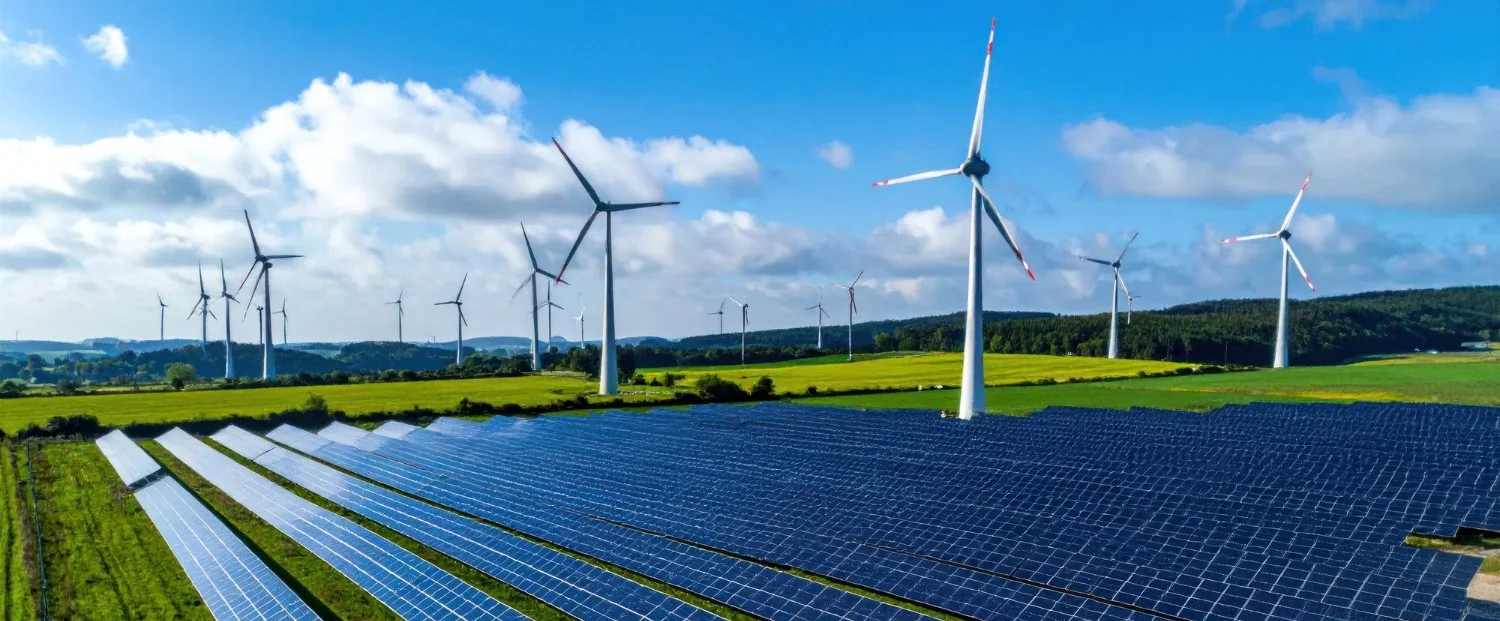
India is expanding its renewable-energy transmission infrastructure through the third phase of the Green Energy Corridor programme, approved by the Union Cabinet on September 30, 2026. The initiative is aimed at strengthening intra-state transmission networks to accommodate the country's growing solar and wind power capacity and improve the movement of renewable electricity from generating facilities to consumers.
Under Green Energy Corridor Phase III, around 51,126 circuit kilometres of transmission lines and nearly 229 GVA of transformation capacity will be developed. The infrastructure is expected to enable the evacuation of up to 135 GW of renewable energy across states and Union Territories, supporting greater integration of renewable power into the electricity grid.
The scheme also provides for the deployment of 50 GWh of Battery Energy Storage Systems. The storage capacity is intended to absorb surplus renewable electricity, provide greater grid flexibility and support power availability during non-solar hours. This is particularly relevant as increasing solar and wind generation places greater demands on transmission networks and grid balancing.
The total outlay for the scheme is ₹1,86,405 crore, including ₹1,36,378 crore for intra-state transmission systems and ₹50,000 crore for battery energy storage. The Central government will provide ₹54,082 crore in financial support, which is expected to help offset transmission charges and contain the impact on electricity costs. The programme is targeted for completion by FY2032-33.
The initiative also includes provisions to strengthen domestic manufacturing and project development. According to the Times of India report, around 70% of the transmission component will comprise new projects awarded through tariff-based competitive bidding, while the remaining 30% will involve brownfield upgrades and network strengthening. Battery storage deployment will also be linked to domestic content requirements to encourage local manufacturing.
The expanded transmission and storage infrastructure could create opportunities across renewable-energy development, power transmission, battery storage, grid management, engineering, construction and domestic clean-energy manufacturing. For businesses operating in energy-intensive sectors, stronger grid infrastructure and greater renewable-power integration could also support access to more reliable and diversified electricity sources.
The expansion of transmission capacity and battery storage brings together key elements of India’s energy transition, including renewable integration, grid resilience and energy storage. Cognitud’s work across energy transition, climate action and sustainable infrastructure can support organisations assessing the business and sustainability implications of these developments and planning their transition toward lower-carbon energy systems.