For most of the 20th century, power moved in one direction: from large centralized generators, along high-voltage corridors, down through regional electricity distribution networks, and into homes and businesses. The electricity network was, by design, passive—it moved electrons, but it did not think. The rise of renewable power sources, particularly solar photovoltaics and wind turbines, has disrupted this model profoundly. Solar panels now sit on millions of rooftops, feeding surplus electricity back at unpredictable intervals. Wind generation ramps up and down with the weather. Electric vehicles represent both a significant new demand category and, potentially, a vast fleet of mobile batteries. Managing this complexity with a passive grid is not just inefficient but also increasingly untenable. A smart grid system addresses this by layering digital intelligence across the entire network. Sensors, advanced metering infrastructure, automated switching equipment, and real-time communication protocols allow grid operators to monitor flows, predict stress points, reroute power dynamically, and integrate distributed energy resources with a degree of precision previously impossible. The result is a network that does not simply carry power; it actively manages it—a distinction that defines every component of the smart grid architecture.
At the consumer end, smart meters—the foundation of Advanced Metering Infrastructure—replace analog devices and communicate bidirectionally with utilities in near-real time, enabling time-of-use pricing and faster fault detection. Moving inward from the meter, the power distribution grid is transformed by automated switches, voltage regulators, and intelligent fault indicators: where an outage once required an engineer to physically locate and isolate a fault over hours, power distribution equipment at modern substations can do this in seconds. Operators now think in terms of the electrical distribution block—a defined, self-aware segment that can be monitored, isolated, and rerouted independently, turning the grid from a fragile chain into a resilient web. Underpinning every active node is energy storage: battery systems at the power distribution hub level absorb surplus renewable generation and release it during demand peaks, displacing the fossil-fueled standby plants that exist solely to cover a few hundred hours of annual peak load. All of this hardware is only as intelligent as the communications layer connecting it. Fiber, cellular, and radio networks carry the data signals that allow a smart grid solution to coordinate across thousands of assets in real time, and it is this connectivity that introduces serious cybersecurity exposure, making grid security one of the fastest-growing disciplines at the intersection of energy and technology.
Generation Is No Longer Where It Used to Be
One of the most consequential shifts reshaping power systems is the decentralization of the electricity generation system. Where generation was once concentrated in a handful of large plants, today millions of distributed generators—rooftop solar panels, small wind turbines, and combined heat and power units—feed into distribution networks that were engineered for a one-way world.
The Physics of Reverse Power Flow
Distribution networks were never designed to handle reverse power flows, and the physics do not accommodate ambiguity well. When a neighborhood generates more solar power than it consumes on a sunny afternoon, that surplus must go somewhere. Without smart grid integration, the result can be voltage instability, equipment damage, and the curtailment of clean energy, effectively wasting renewable resources of electricity that took significant capital to develop.
How Active Management Changes the Equation
Smart grid technologies resolve this through active distribution management. Automated voltage regulation, demand response signals to flexible loads such as EV chargers and smart water heaters, and real-time visibility into distributed generation allow operators to accommodate high renewable penetration without instability. The power distribution unit at the substation level, equipped with modern power electronics and communication interfaces, becomes a dynamic control point rather than a passive transformer. IRENA's analysis makes the ambition plain: global renewable power capacity must expand from roughly 3,400 GW in 2022 to more than 10,000 GW by 2030, an expansion unmanageable without intelligent grid systems.
Technology alone does not build smart grids, the regulatory architecture governing energy markets, network access, and data privacy plays an equally decisive role. In many jurisdictions, frameworks built around the old, centralized model actively inhibit smart grids energy management systems, peer-to-peer trading, and demand response aggregation. Progressive reforms are changing this. The EU's Clean Energy for All Europeans package grants consumers the right to become prosumers (producing and consuming electricity) and requires member states to enable flexibility services at the distribution level. FERC's Order 2222, issued in September 2020, opened U.S. wholesale electricity markets to aggregated distributed energy resources, effectively inviting smart grid technologies into the highest levels of grid management. Governments in the Global South are also seizing the opportunity. Rather than replicating the centralized grid build-out of the 20th century, several nations are jumping directly to distributed, digitally managed networks—similar to how mobile telephony bypassed fixed-line infrastructure. India's Ministry of Power-backed Smart Grids India Forum has been instrumental in piloting AMI rollouts across multiple states, offering a replicable model for developing economies navigating rapid electrification.
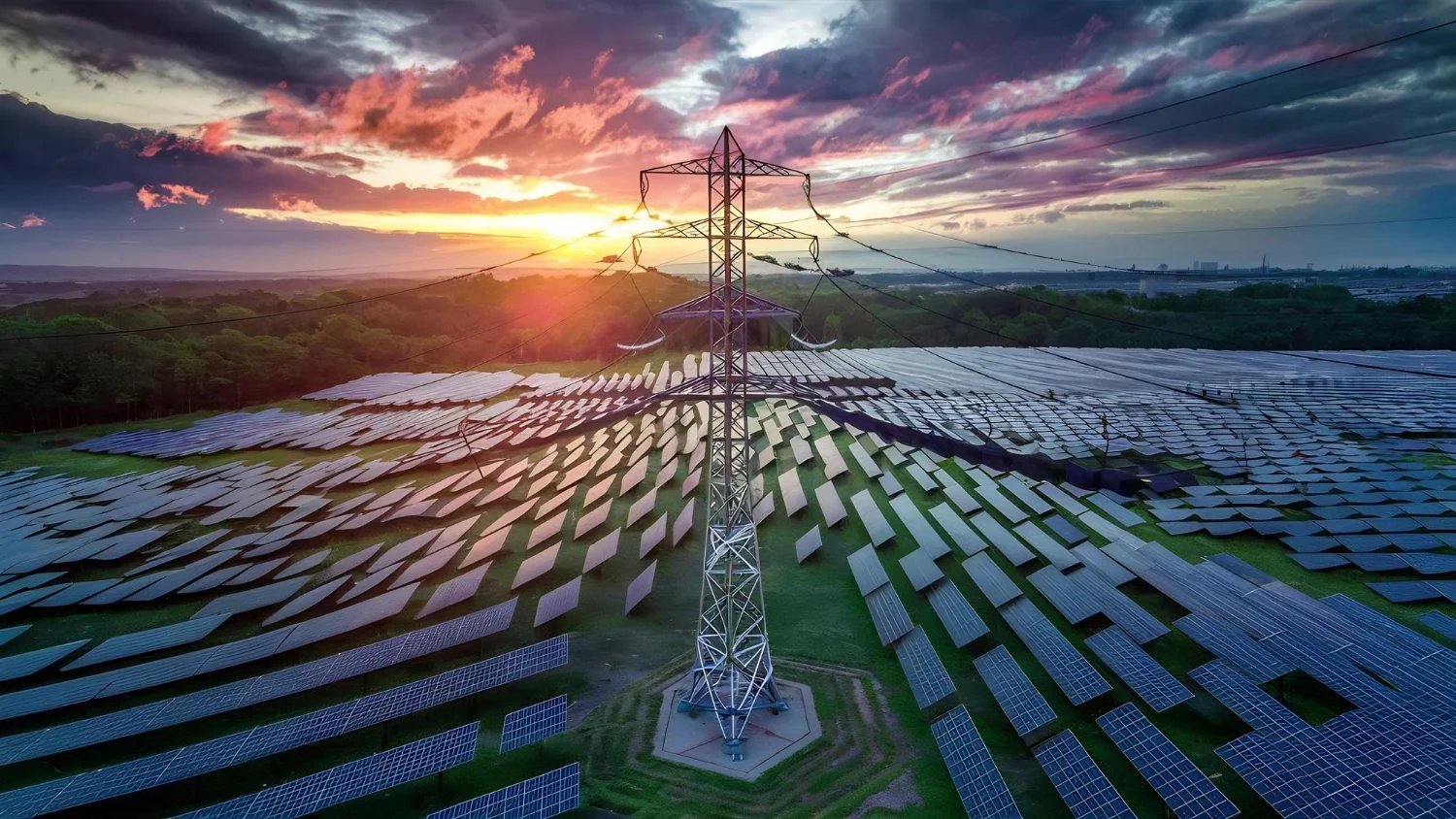
While much of the smart grid conversation centers on distribution networks, the high-voltage transmission layer remains equally critical. The iconic electricity transmission tower, a steel lattice structure carrying power at hundreds of kilovolts across hundreds of kilometers, is the physical backbone that makes large-scale renewable deployment possible. Offshore wind farms, desert solar parks, and mountain hydropower can only reach populated centers if the transmission infrastructure exists to carry them. High-voltage direct current (HVDC) technology, increasingly favored for long-distance and submarine transmission, is being paired with advanced grid management software to create supergrids—interconnected transmission systems spanning entire continents. When wind generation is low in Germany, it may be strong in Scotland or Morocco; connecting these regions turns geographic diversity into a resilience asset. The investment gap is stark. The IEA estimates that annual global grid investment needs to nearly double from approximately $300 billion to over $600 billion by 2030 to meet national climate targets. The power distribution panel upgrades at substations, the HVDC lines crossing mountain ranges, and the digital systems orchestrating it all must be financed and built at pace because a renewable energy capacity that cannot reach consumers is, economically, no capacity at all.
The technology exists. The economics are increasingly favorable. What the smart grid transition still lacks, in most markets, is the institutional coherence to move at the right speed. Five priorities stand out:
Equipment from different vendors must communicate seamlessly. Harmonized protocols such as IEC 61968/61970 and IEC 61850 are non-negotiable for scalable smart grid solutions.
Smart grids require grid operators to be equally comfortable with data analytics, cybersecurity, and power engineering. Utilities and governments must invest in reskilling at scale.
Much of the smart grid build-out occurs in regulated network businesses with modest returns. Green bonds, blended finance, and state-backed guarantees are needed to attract sufficient private capital.
Smart meters and sensors generate enormous volumes of consumer data. Clear frameworks governing ownership, privacy, and third-party access are essential for maintaining public trust.
Lower bills, cleaner air, and greater resilience are the tangible benefits smart grids deliver to communities. Policymakers must design programmes that distribute these gains broadly, as grid intelligence should not become a privilege exclusive to wealthier households and better-resourced businesses.
Cognitud’s ESG consultants bring structured advisory rigor to clients navigating smart grid infrastructure decisions, from utilities undertaking grid modernization to governments designing regulatory frameworks for distributed energy. Unlike generalist advisory engagements, Cognitud specialists co-develop grid readiness assessments that map existing network assets against the integration requirements of a client's renewable energy pipeline, identifying upgrade sequencing that minimizes capital expenditure while maximizing renewable absorption capacity. For industrial clients, Cognitud teams translate smart grid investment options into business case models for CFOs and boards, quantifying avoided costs, stranded asset risks, and long-term tariff exposure across grid evolution scenarios. Cognitud also supports clients in engaging regulators proactively, framing smart grid projects within existing incentive structures or advocating for adjustments where current frameworks create deployment barriers.


Abhigyan Gupta
Advance your strategy with solutions calibrated to your market environment.
Electricity distribution is the stage of the power system that delivers electricity from substations to end users such as homes, businesses, and industrial facilities. It operates through regional distribution networks made up of transformers, local power lines, and switching equipment that safely route electricity across communities and economic sectors.
Smart grids are digitally enhanced electricity networks that use sensors, smart meters, automation systems, and real-time communication technologies to manage electricity more intelligently. Unlike traditional grids, smart grids can monitor energy flows continuously, integrate renewable energy sources, and respond dynamically to changes in electricity demand and supply.
Smart grids work by combining digital technologies with physical electricity infrastructure to create a more responsive and efficient power system. Sensors, advanced metering infrastructure, automated switching systems, and communication networks allow utilities to monitor grid conditions in real time, reroute electricity when disruptions occur, and balance renewable generation with changing consumer demand.
Smart meters are generally considered safe and are widely deployed across modern electricity systems. They help utilities monitor energy use in near real time and improve grid efficiency. However, because smart meters rely on digital communication networks, they can create cybersecurity and data privacy risks if utilities do not implement strong protections and secure data management systems.
Smart grid technology refers to the systems and tools that enable intelligent electricity management across modern power networks. This includes smart meters, automated substations, advanced metering infrastructure (AMI), battery storage systems, communication networks, grid sensors, and software platforms that help utilities monitor, control, and optimize electricity distribution more effectively.