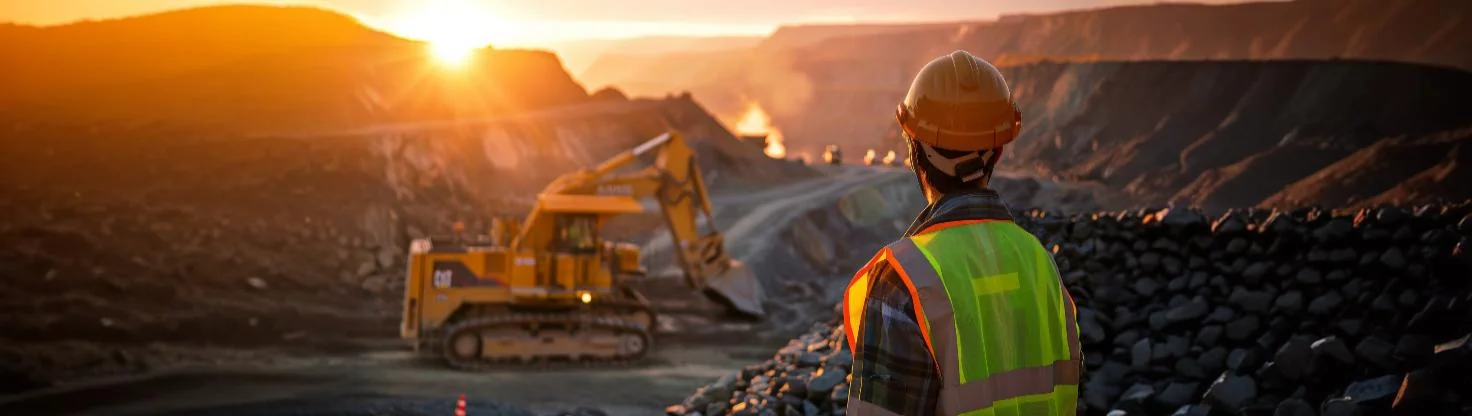
Sustainable mining is a method of mining that mitigates environmental, economic, and social impacts while also regulating the rate of resource extraction. It avoids compromising on the future needs of the next generation, which are not confined to the mined resources but also extend to food, water, sanitation, and jobs. With sustainable mining, the mining companies can help provide a better quality of life to the mine workers while contributing extensively to the environment.
As predicted by the International Energy Agency (IEA), the demand for specific minerals will increase twentyfold and above by the year 2040 to support the conversion to clean energy. Moreover, the World Bank has assessed that the production of minerals such as cobalt and lithium will go up by about 500% by the year 2050.
The increase in demand for mineral resources strains water and energy resources necessary for metal extraction while also posing a great deal of environmental risks. This situation calls for an urgent adoption of sustainable mining techniques.
According to the IEA, the global sustainable mining solutions market was $2,591.6 million in 2023, which will eventually reach $12,371.0 million by 2032 at a CAGR of 18.97%.
The impact of traditional mining is massive as it spreads across air, water, and land, which thereby, underscores the urgent need for responsible mining practices. Let’s delve deeper into how traditional mining practices affect the environment in various aspects:

Be it underground mining or open-pit mining, both mining methods lead to water contamination after contacting groundwater or surface water. Nearby communities face challenges when their water supply gets cut due to the contaminated water. Surface water contamination takes place when the dissolved metals, such as radionuclides, sulfates, and nitrates, travel through streams. They could also contaminate groundwater if they get in contact with it due to soil erosion. Moreover, the chemical that is used for the processing of ores is the pollution hotspot, which results in adversely affecting the aquatic beings and the nearby residences.

During the oxidation of pyrite or iron ores, which are rich in sulfur, acidic water is produced. The outflow of this acidic water is known as Acid Mine Drainage (AMD). Also called Acid Rock Drainage (ARD), these sites most probably constitute dissolved metals like zinc, iron, silver, copper, and lead. When these metals flow through streams in high concentrations, they pose a risk to both human and aquatic life.

In the procedure of gold and silver recovery, cyanide plays a key role in their beneficiation process. It is noteworthy that cyanide is extremely toxic to humans, even in low concentrations. As per the International Cyanide Management Code, only 100 to 500 parts per million, i.e., 0.01% to 0.05% of cyanide, is generally used during the commercial gold operations. Most commonly, when poor waste management is practiced or the design of tailings dams fails, cyanide gets spilled across places and leads to mass killings of fish or other beings.

During the processing of minerals, mining, heat treatment, and beneficiation, both particulate and gaseous emissions are released. The particulate matter (PM) emitted from mining ranges from 2.5 micrometers (PM2.5) to 10 micrometers (PM10). Mining activities such as hauling, blasting, crushing, loading, and dumping waste can give rise to PM10, which further leads to the formation of fugitive clouds of dust. Other combustion processes produce PM2.5, which encompasses all the suspended particulate matter that is less than 2.5 micrometers.

In mining, structural instability, especially experienced around tailings disposal systems at older mining sites, arises when the soil chemistry fails to resist degradation due to constant changes to the nearby ground. When the tailings get unstable, it leads to the release of pollutants into the environment through waterways and more.
Due to the unrestricted metal extraction that leaves negative effects on the environment, the need to push the implementation of renewable energy sources has escalated. Let’s look at some of the most common yet effective practices that can help shift from traditional mining to the sustainable one.
Moving from coal-powered to renewable energy sources in order to power sustainable mining operations is the most basic way to cut down on carbon emissions. Interestingly, South Africa, Mauritius, and Chile are some of the leading countries offering renewable energy to the mining areas. As per the International Energy Forum, 1 gigawatt of renewables is already functional in the mining areas globally, with the other 1 gigawatt in development.
The major environmental risks during mining come from some traditional mining methods, such as underground or open-pit mining. To lower the soil erosion and surface disturbance at the mining regions, low-impact mining methods like in-situ leaching (ISL), bioleaching, and placer mining can be implemented.

In this type of environmentally sustainable mining practice, the ore is left in the ground where it was, and instead, liquids are pumped into it to extract the minerals from the ore through leaching. In this process, there is no production of tailings or waste rock with the minimum surface disturbance.
This process makes use of microorganisms such as archaea or bacteria to extract precious metals like gold, silver, copper, zinc, etc., from a low-grade ore. There are several types of bioleaching methods, but the most common one is where the metals are extracted from ore by unearthing sulfide minerals with the help of bacteria that derive energy from non-carbon compounds.
Here, placers refer to the natural deposits of heavy and precious minerals that occur due to the concentration of water in beaches, riverbeds, and other sedimentary settings. Since these minerals are heavier than the encircling gravel, sand, and other materials, they are collected through the sedimentation process. Stricter regulatory compliance for placer mining is necessary to achieve sustainability in the mining industry.
Simple conversion from diesel-powered equipment to battery-powered ones can reduce environmental impact caused by mining. For instance, using tires that are easily recyclable, long-lasting and provide higher ROI in rocky terrains can gradually lower the equipment costs. Epiroc, the Swedish mining equipment manufacturer, intends to be 100% electric in the forthcoming years.
Waste produced through mining, like wastewater, rocks, and tailings, is often left behind or stored in giant structures like tailing dams, which leads to environmental damage. With a sustainable mining plan, the waste rocks can be reused during on-site construction, like backfilling voids, and the wastewater can be used for on-site dust suppression, as a coolant, or for agricultural purposes as well. Depending on the tailings chemical and mineral composition, they can be used in brick production, for agroforestry, or as paint extenders.
Traditional mining practices end up damaging the environment in more ways than one, such as raising the acidity of water and soil and scraping the topsoil layer that is essential for plant growth. This leaves the mining area susceptible to soil erosion, making it unfavorable to new vegetation. Laudably, a few mining companies have worked towards restoring the mining sites, such as Alcoa in Australia, which set up large-scale reforestation initiatives to achieve sustainable mining.
The International Council on Mining and Metals (ICMM) lately committed, in accordance with the Paris Agreement, to achieving the goal of net-zero Scope 1 and 2 by the year 2050. To note, ICMM constitutes 28 mining communities as well as 35 commodities associations globally. The Intergovernmental Forum on Mining, Minerals, Metals, and Sustainable Development (IGF) states that the worldwide production of essential minerals that have been extracted using low-carbon technologies is expected to surge by 173% for vanadium, 241% for indium, 383% for graphite, 585% for cobalt, and 965% for lithium by the year 2050. In the net-zero emission scenario, the IEA predicts a 55% fall in the usage of coal by 2030. Based on the mine, Scope 3 emissions can be responsible for up to 95% of a business’s total emissions.
Companies that place emphasis on keeping mining and sustainability in conjunction do not just help in the reduction of environmental crises but also contribute to the boost of their brand image and competitiveness. Here, sustainability consultants of Cognitud come as the right expertise that the businesses need to meet their sustainability targets.
Our advisors hold years of experience in the environmental, social, and governance (ESG) and related fields. They are skilled in helping companies achieve environmental sustainability in mining by developing strategies and offering complete guidance to them on how to minimize their overall carbon footprint while achieving cost savings.
By conducting impact assessments, our sustainability experts identify potential risks that could affect the organization’s ability to meet sustainability standards.
They further devise sustainable mining strategies to reduce these risks, such as optimizing resource utilization by implementing advanced ore processing technologies, lowering the consumption of energy and water, and adopting waste reduction practices.
In addition, our experts help businesses navigate complex mining regulations, facilitating their compliance with relevant norms. All things considered, our sustainability consultants do their best to make your sustainable journey a smooth ride.


Shipra Jain
Future-proof your organization with sustainability frameworks tailored to your sector.
Sustainable mining is a method of extracting minerals that minimizes environmental, social, and economic impacts while regulating the rate of resource use. It ensures that mining today does not compromise the ability of future generations to meet their needs, addressing not only resource availability but also factors like food, water, and employment.
Sustainable mining is crucial because rising demand for minerals to support clean energy technologies strains natural resources and ecosystems. By adopting sustainable practices, the mining industry can reduce greenhouse gas emissions, conserve water and energy, mitigate environmental damage, and support long-term economic and social well-being.
Key sustainable solutions include using renewable energy to power mining operations, implementing low-impact techniques like in-situ leaching and bioleaching, switching to eco-friendly equipment, reusing mining waste for construction or agriculture, and rehabilitating mined areas to restore ecosystems.
Environmentally sustainable mining focuses on minimizing harm to the environment through responsible practices. This includes reducing carbon emissions, preventing water and soil contamination, managing waste responsibly, and rehabilitating mined lands to support biodiversity and ecosystem recovery.
Mining can be made more sustainable by adopting renewable energy sources, improving resource efficiency, reducing emissions, implementing waste reuse practices, enforcing strict environmental regulations, and integrating advanced technologies to minimize environmental footprints throughout the mining process.