Due to the increased acidity of the ocean, the ocean chemistry experiences massive changes that adversely affect not just aquatic beings but also the human population.
Table Head |
|---|
| Enter Data |

Despite global momentum, challenges of clean water and sanitation remain. One of the biggest disruptors is climate volatility. As rainfall patterns shift and extreme weather events grow more frequent, the delicate balance of global water systems gets increasingly unstable.
Infrastructure designed for past conditions can no longer keep up, making access to safe drinking water unpredictable, especially in rural and drought-prone regions. In some areas, the issue is not the lack of water; it’s the sudden abundance in the form of floods that contaminate and cripple fragile supply chains.
Beyond environmental pressures, invisible systems failures are slowing progress. The COVID-19 pandemic did not just strain hospitals it also exposed how unprepared many water utilities are for global shocks. With falling revenues and interrupted supply chains, critical investments in water treatment and sanitation came to a standstill.
But the crisis also underscored a harsh truth: without access to water and hygiene, public health efforts are incomplete. Lastly, how progress is being measured remains a big challenge. It’s easy to count things like the number of water pipes or toilets built, but that doesn’t tell the whole story.
What really matters is how people experience these services—like whether the water is actually safe to drink, if women feel secure using the toilets, or if families can afford the services. New tools that focus on people’s real-life experiences are still being developed and not widely used yet.
Without this kind of data, governments and organizations may miss the real problems, and their solutions may not reach the people who need them most.

Enter Subheading para
Water touches every part of life, our health, our environment, our economies. Yet the challenges of clean water and sanitation remain immense, with access still unequal, fragile, and often overlooked. Achieving SDG 6 is not just the job of governments or water utilities. It’s a collective responsibility that spans sectors, borders, and generations.
From policymakers setting inclusive agendas, to engineers designing climate-resilient systems, to communities managing local water sources, everyone has a role to play. Businesses can drive innovation and funding. Educators can build awareness by highlighting the benefits of clean water and sanitation from classrooms to boardrooms. Citizens, too, can protect water sources, demand transparency, and treat water with care.
One alone cannot solve the clean water and sanitation issues we face. Real progress will come when we move in sync—when global ambition meets local action, when technology supports tradition, and when water is seen not as a commodity but as a common good. Only then will this shared responsibility become a shared success.

Dr. Somnath Hazra
Build actionable plans grounded in your sector’s risks and growth priorities.
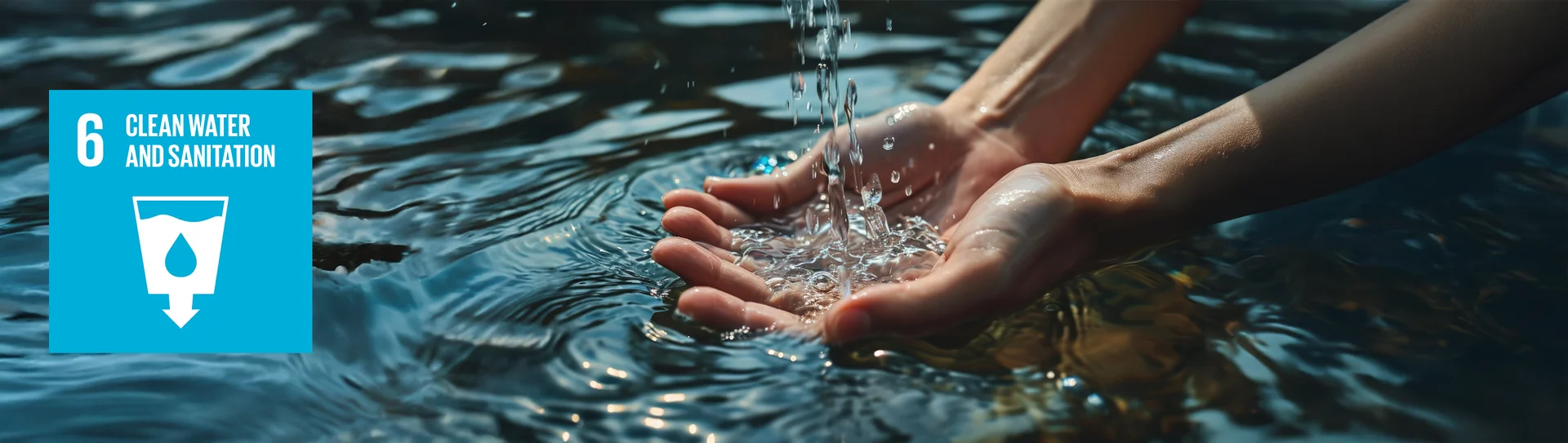
SDG 6 is one of the 17 United Nations Sustainable Development Goals. It aims to “ensure availability and sustainable management of water and sanitation for all” by 2030. It covers safe drinking water, proper sanitation, hygiene, wastewater treatment, water-use efficiency, and ecosystem protection.
Achieving SDG 6 requires collective action: investing in climate-resilient infrastructure, improving wastewater treatment, promoting water reuse, reducing pollution, protecting ecosystems, and ensuring community participation in water management.
Water is essential for life, health, food security, energy, and ecosystems. Without clean water and sanitation, poverty reduction, gender equality, and global health cannot be achieved. SDG 6 is the foundation for many other development goals.
Individuals can save water, support NGOs working on water projects, advocate for better policies, adopt eco-friendly products, and raise awareness. Businesses and institutions can invest in water recycling, reduce pollution, and promote water-efficient practices.
The goal is to ensure that everyone, everywhere, has reliable access to safe, affordable, and sustainable water and sanitation services without discrimination.