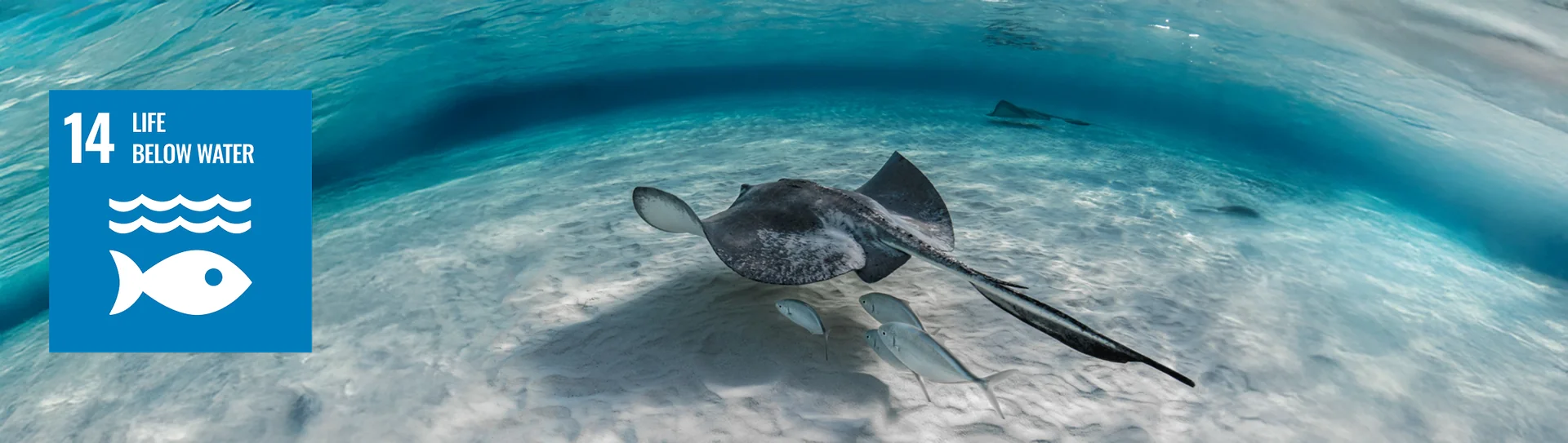
SDG 14 is built around ten targets that aim to reduce marine pollution, regulate harvesting, protect ecosystems, and strengthen international law. The targets recognize that oceans are connected and protecting them requires countries to work together beyond borders. To measure progress, SDG 14 tracks indicators ranging from the percentage of marine areas protected, to the sustainability of fish stocks, to the financial support mobilized for conservation. Together, these metrics show whether humanity is taking real steps to reverse the damage or letting the tide of destruction rise unchecked.
Targets | Indicators |
|---|---|
| 14.1 Prevent and significantly reduce marine pollution by 2025 | 14.1.1 Index of coastal eutrophication and plastic debris density |
| 14.2 Sustainably manage and protect marine and coastal ecosystems by 2020 | 14.2.1 Number of countries using ecosystem-based approaches |
| 14.3 Minimize and address impacts of ocean acidification | 14.3.1 Average marine acidity (pH) at sampling stations |
| 14.4 Regulate harvesting and end overfishing by 2020 | 14.4.1 Proportion of fish stocks within biologically sustainable levels |
| 14.5 Conserve at least 10% of coastal and marine areas by 2020 | 14.5.1 Coverage of protected areas in relation to marine areas |
| 14.6 Prohibit certain fisheries subsidies that contribute to overfishing by 2020 | 14.6.1 Degree of implementation of international instruments to combat illegal fishing |
| 14.7 Increase economic benefits from sustainable marine resources to small island developing states by 2030 | 14.7.1 Sustainable fisheries as a proportion of GDP in these countries |
| 14.a Increase scientific knowledge, research capacity, and transfer marine technology | 14.a.1 Proportion of total research budget allocated to marine technology research |
| 14.b Provide access for small-scale artisanal fishers to marine resources and markets | 14.b.1 Extent to which legal, regulatory, policy, or institutional frameworks support and safeguard access rights for small-scale fisheries |
| 14.c Implement and enforce international sea law (UNCLOS) | 14.c.1 Number of countries actively advancing ratification and implementation of legal and policy measures aligned with UNCLOS for ocean protection |

Achieving SDG 14: Life Below Water faces significant and multifaceted challenges that demand urgent attention. Currently, SDG 14 is off-track and lagging behind other SDGs, with worrying regressions in areas such as marine pollution, conservation of coastal and marine ecosystems, and the sustainable use of marine resources—challenges that are particularly pronounced in Asia and the Pacific region.
A major barrier to progress is the lack of sufficient and reliable data, as many targets under this goal remain unmeasurable due to indicator gaps, limiting the ability to assess progress or design effective interventions.
Human activities further intensify these challenges: overfishing, illegal, unreported and unregulated (IUU) fishing, and destructive fishing practices continue to threaten ocean health and undermine sustainability.
Additionally, the high costs and technical complexities of marine scientific research, especially in areas beyond national jurisdiction, constrain efforts to deepen scientific understanding and improve conservation.
Even where marine protected areas (MPAs) exist, their effectiveness is hampered by inadequate scientific input, weak integration into broader governance frameworks, insufficient stakeholder engagement, and underinvestment compared to terrestrial protected areas, restricting their capacity to conserve biodiversity and support sustainable livelihoods.
Beyond direct marine pressures, terrestrial activities such as pollution runoff, unsustainable coastal infrastructure development, climate change impacts, and ocean acidification compound the strain on marine ecosystems.
These interconnected challenges highlight the need for holistic, integrated, and cooperative approaches at local, national, regional, and global scales.
To truly safeguard life below water, it is essential to enhance marine conservation, promote sustainable fisheries, strengthen data collection and monitoring systems, increase funding and investments, and ensure active participation from all stakeholders, including governments, scientific communities, and local communities who depend most on marine resources.
The way forward to achieve SDG 14 (Life Below Water) entails a comprehensive set of strategic actions and policy recommendations:

Implement integrated and science-based management plans to conserve and sustainably use marine resources. This includes expanding marine protected areas, improving fisheries management, and addressing illegal, unreported, and unregulated fishing.

Mobilize significant financial resources, estimated at around $150 billion annually, to close funding gaps and support conservation, sustainable fisheries, ocean research, and pollution reduction initiatives.

Improve ocean science and data collection to better understand marine ecosystems, monitor progress, detect emerging threats like ocean acidification, and inform policy decisions.

Collaborate across countries and regions to promote coordinated ocean governance, share knowledge and technology, and leverage synergies with other global goals such as climate action and biodiversity.

Raise awareness and understanding among the public and policymakers about ocean challenges and the importance of sustainable ocean management.

Take urgent actions to reduce marine pollution from land-based and maritime sources, tackle ocean acidification, and build resilience against climate change effects on marine ecosystems.

Involve local communities, indigenous peoples, the private sector, and civil society in decision-making processes and implementation efforts to ensure inclusive and equitable outcomes.
Safeguarding oceans is a shared responsibility that extends across governments, businesses, civil society, and individuals. No single stakeholder can address the complex challenges of overfishing, pollution, climate change, and biodiversity loss alone. We must empower local communities as custodians of marine resources, strengthen government policies and enforcement, and encourage businesses to adopt sustainable practices and innovation.
Simultaneously, individuals contribute by practicing conscious consumption, minimising plastic use, and supporting initiatives that are friendly to the ocean. Only through collective action and cooperation at local, national, and global levels can we ensure that life below water is protected for future generations.

Dr. Somnath Hazra
Build actionable plans grounded in your sector’s risks and growth priorities.
SDG 14 stands for “Life Below Water”, one of the UN’s Sustainable Development Goals. It focuses on conserving and sustainably using oceans, seas, and marine resources to protect marine ecosystems, support livelihoods, and ensure a healthy planet.
Because the ocean is essential to life on Earth. It gives us more than half the oxygen we breathe, regulates the climate, provides food, jobs, and medicine, and supports billions of people. But pollution, overfishing, and climate change are pushing it to a breaking point.
The main goal is to protect marine ecosystems, reduce ocean pollution, end overfishing, and promote sustainable marine practices—so our oceans can keep supporting life for generations to come.
We can: • Use less plastic and avoid single-use items • Support sustainable seafood choices • Reduce chemical use that could end up in waterways • Participate in beach cleanups and marine conservation efforts • Educate others about ocean health • Push for policies that protect marine life
Every action counts. You can: • Cut plastic waste • Choose reef-safe sunscreens • Eat sustainable seafood • Volunteer for ocean cleanups • Educate your community • Support organizations and policies that protect marine life