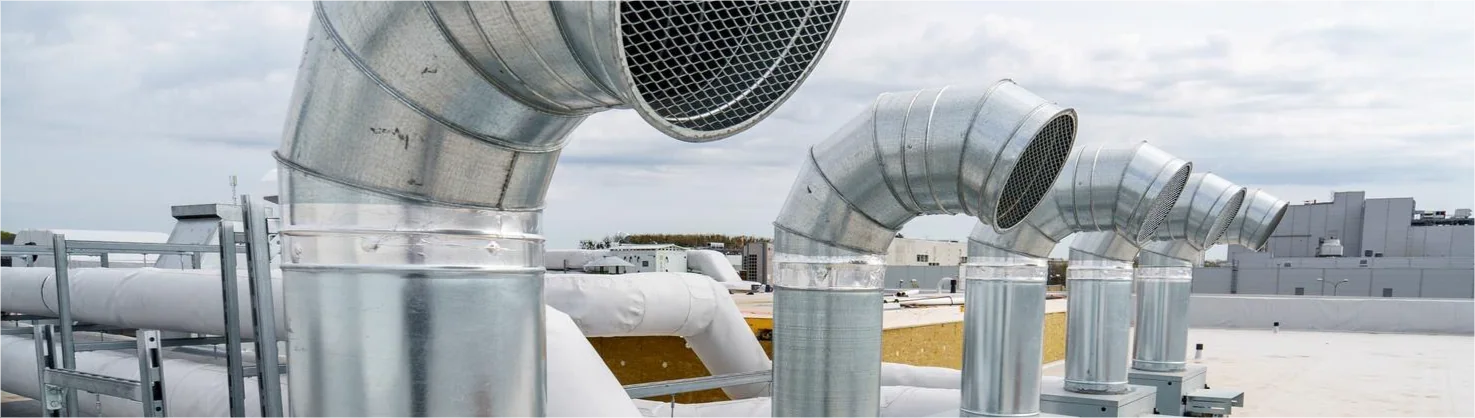
Also known as DAC, Direct Air Capture is a form of carbon removal method that sucks up air from the atmosphere and filters it to segregate carbon dioxide that has been built up and settled in the air for quite a long time. While directly capturing the carbon from the atmosphere, DAC lowers the atmospheric concentration of carbon with the help of clean energy sources such as energy-from-waste, renewable energy, and other waste heat alternatives.
The need for Direct Air Capture is more urgent than ever, as by the end of the year 2030, the International Panel on Climate Change (IPCC) has stated to reduce carbon emissions by half. In order to bring the goal to fruition, Direct Air Capture carbon removal is the most efficient solution.
As per the State of Carbon Dioxide Removal report of 2024, co-curated by the researchers of the University of Oxford, approximately 7 to 9 billion tonnes of carbon need to be eliminated from the atmosphere every year until the end of the year 2050 in order for the world to meet the 1.5°C Paris Agreement target. While lowering carbon emissions is an integral part of the net zero path, carbon removal from the atmosphere requires more attention than ever.
Direct Air Capture has two key techniques, one of them being a solid-based capture method (S-DAC) and the other being the liquid-based capture method (L-DAC).
S-DAC makes use of solid sorbents at room temperature and pressure, and with the help of a temperature-vacuum swing method, carbon dioxide is released at low temperature (between 80°C and 100°C) and pressure.
In the L-DAC, there are two closed chemical loops wherein one loop exposes the air to an aqueous basic solution to capture carbon dioxide, and the other loop takes the air out of the solution through heating at temperatures between 300°C and 900°C.
Together, these Direct Air Capture methods facilitate scalable carbon removal with possible incorporation into industrial systems and geological storage solutions.
Now let’s explore how the other carbon capture technique, Carbon Capture Storage (CCS) method functions differently from the Direct Air Capture. The major difference between Direct Air Capture and CCS lies in the location of carbon capture. While the DAC technique captures carbon that is already present in the atmosphere, CCS emphasizes capturing carbon at its source of emission, mainly at industrial facilities or power plants. Even the mechanisms of both methods vary to a considerable extent. In the Direct Air Capture process, carbon is collected from the atmosphere using a large fan or air contactor, then unbound through heating, and finally either stored or recycled to create products for further use. In CCS, the carbon is captured with the help of filters or liquids consisting of bounded chemicals that help with the concentration of carbon dioxide, which is then unbound through heating and stored underground.
Being one of the best alternatives to capturing carbon, Direct Air Capture has many benefits under its belt.

DAC plants can be employed extensively in diverse regions, contrary to CCS technology, which is restricted to being installed at carbon emission sources only, particularly in industrial facilities or power plants. Moreover, installing DAC plants near the carbon storage areas can remove the requirement of pipeline infrastructure needed for the transfer of carbon to the storage site, therefore streamlining the overall process of Direct Air Capture and storage and eliminating the risk of carbon leakage while achieving huge cost efficiency.
The need for land for Direct Air Capture systems installation is comparatively less than the other alternatives, such as Bioenergy with Carbon Capture and Storage (BECCS). As per nature.com, the requirement of land for BECCS since 2019 has been between 2,900 and 17,600 sq. ft. per metric ton of CO2 annually. However, for embedding DAC, only 0.5 to 15 sq. ft. of land is required.
Post capturing carbon from the atmosphere through the DAC method, it can either be stored forever or reused to create long-lived products like cement or building insulation and short-lived products such as synthetic fuels, biodegradable plastics, and synthetic beverages, to name a few. As these processes store carbon for a limited time, they are referred to as one of the types of carbon recycling.
The usage of synthetic fuels can help achieve net-zero as these fuels can replace fossil fuels, thus contributing to carbon mitigation. It is noteworthy that this method will probably not eliminate carbon from the atmosphere, but it certainly will keep carbon from getting multiplied in the atmosphere. Similarly, storing carbon in cement or geological formations helps minimize the levels of carbon in the air.
Putting aside the advantages of Direct Air Capture, let’s shed some light on the challenges that DAC brings with it.

One of the most significant concerns of Direct Air Capture is its expensiveness. From 2021, the cost of using the DAC method to remove a metric ton of carbon lies between $250 and $600. The Direct Air Capture cost can also vary depending on the type of energy used for the operation, say liquid or solid sorbent technology, and on what scale the operation is taking place.

The extraction of one million tonnes of carbon dioxide every year from the atmosphere needs around 200 to 300 megawatts of zero-carbon energy, which is an amalgamation of electricity and heat. Since the supply of zero-carbon energy is very limited at the present time, considering DAC as the best alternative to others in the current scenario is debatable.

After capturing carbon through DAC, it must be moved to a storage site, specifically into geological formations. Here, the process poses a threat to the environment, with a slight possibility of the pipeline that is moving carbon to the storage getting damaged, leading to carbon leakage. Apart from this, the risk of polluting groundwater and disrupting geological formations that result in seismic disturbances is worth considering.
As of now, 27 DAC plants are authorized all over the world, capturing only 10,000 tonnes of carbon per year in totality, as reported by the International Energy Agency (IEA). Out of these 27 plants, 18 are situated in Europe, Canada, and the United States of America.
The future scenario of Direct Air Capture seems quite optimistic with its ability to mitigate carbon emissions, build a climate-neutral source material, and encourage a net-zero future. Nevertheless, DAC brings along with it some concerns as well in the form of high implementation costs, lack of decision-making aid, and rivalry from other methods. To note, 130 Direct Air Capture (DAC) plants are commissioned to be installed, out of which 15 are in the development phase. If all these 15 plants begin their operations soon, they would offer less than 5% of the 80 metric tonnes of carbon capture capacity on an annual basis by the year 2030 to be on the net-zero track, as estimated by IEA.
Sustainability consultants of Cognitud have the utmost knowledge and experience in their domain, and taking suggestions from them before taking any decision on DAC will be beneficial for the business. Here’s how:
Our experts will follow a systemized procedure where they will first analyze the carbon footprint that a business has. Then, they will find out the best-suited areas for setting up Direct Air Capture plants while considering key factors such as carbon dioxide concentration, energy availability, and regulatory environment.
Besides, our sustainability advisors will assess the cost benefit of the DAC projects, which includes return on investment (ROI). They will then identify the best DAC providers based on their track record, facilities, and economic reliability.
Thereafter, our sustainability consultants will set clear goals for the usage of DAC, for instance, net zero emissions, carbon neutrality, and more. Above all, they will devise a plan to integrate DAC into a business's comprehensive sustainability strategy and monitor the carbon capture rate of the DAC plants.
Considering all factors, our sustainability experts will ensure that a business's sustainability efforts perfectly align with environmental rules and regulations, while simultaneously mitigating carbon emissions in the most effective manner possible.

Direct Air Capture technology is an innovative approach to protect the world from the worst impacts of climate change and achieve net zero emissions. However, further considerations regarding its operations, costs, and energy usage are necessary to maximize its benefits as soon as possible.

Abhigyan Gupta
Advance your strategy with solutions calibrated to your market environment.
Direct Air Capture (DAC) is a technology that removes carbon dioxide (CO₂) directly from the atmosphere using chemical processes. The captured CO₂ can then be stored underground or used in products like fuels and building materials.
DAC works by passing ambient air through filters or chemical solutions that selectively capture CO₂ molecules. The captured CO₂ is then separated, compressed, and either permanently stored or repurposed.
Currently, DAC is expensive, costing between $250 and $600 per ton of CO₂ removed. However, costs are expected to decrease as the technology scales and efficiency improves.
DAC is considered a promising but supplementary climate solution. While it can remove significant amounts of CO₂, its high cost and energy requirements mean it should complement, not replace, emission reductions.
As of 2025, there are around 25 operational DAC plants worldwide, with more under development as investment and interest in carbon removal grow.