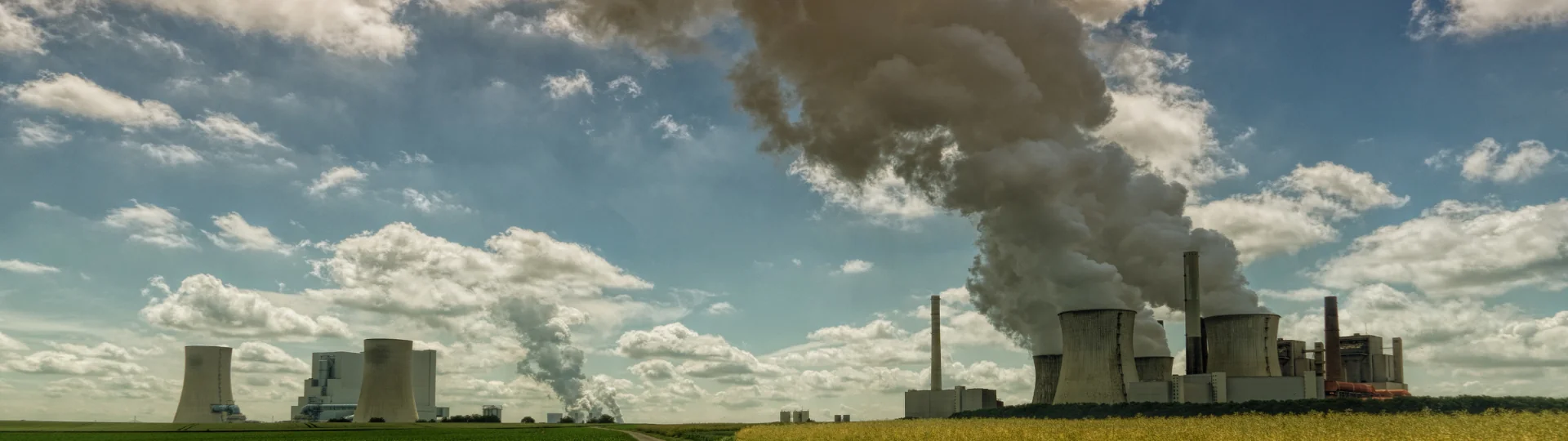
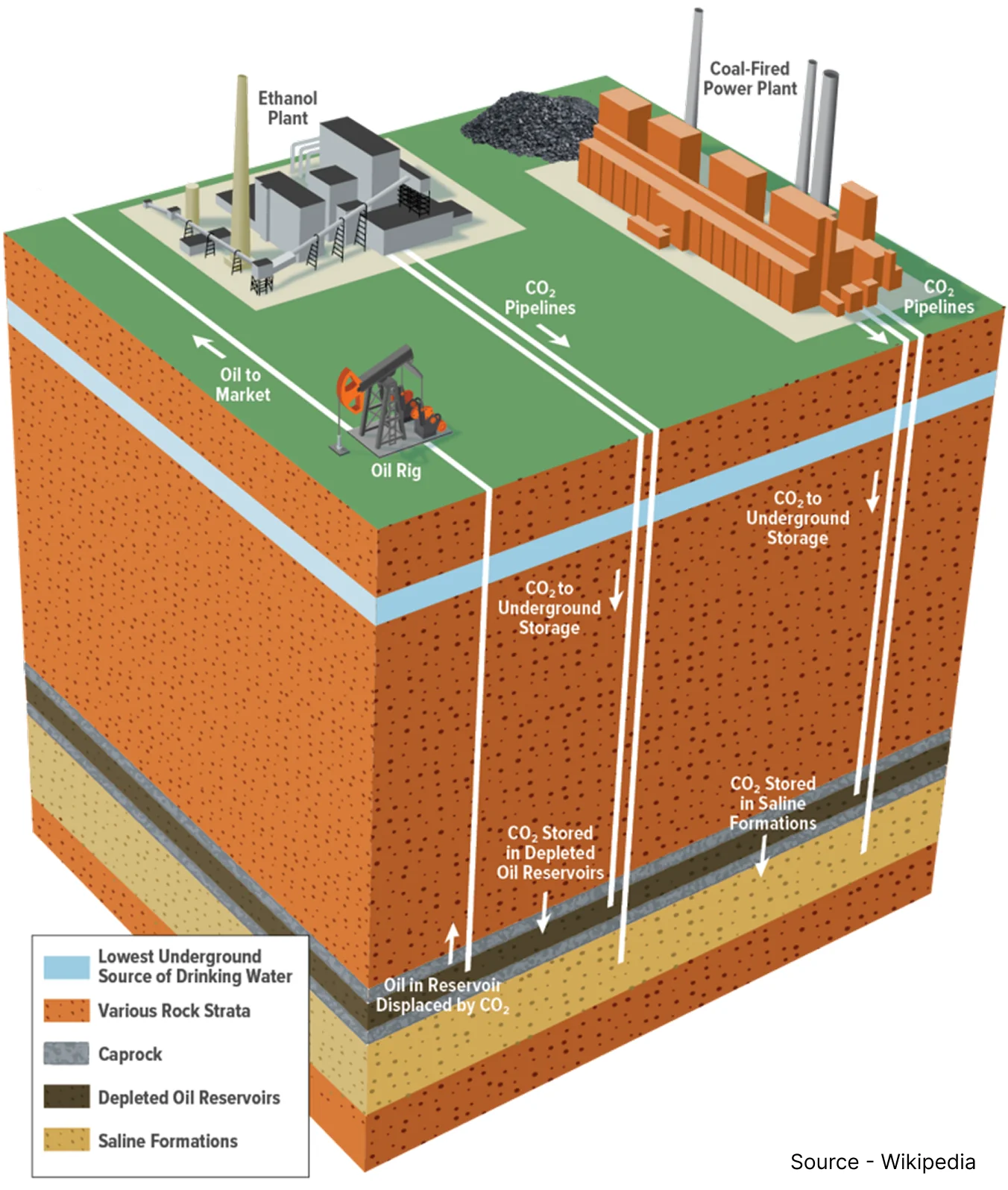
In an effort to reduce the carbon dioxide emissions from large industrial sources, Carbon Capture and Storage was implemented. In 1996, Norway's Sleipner project became the first large-scale CO₂ capture and injection project with dedicated geological storage and monitoring. The project was supported economically by Norway's CO₂ tax, introduced in 1991, while CO₂ removal was also technically necessary to meet natural-gas specifications. The Carbon Capture and Storage process requires capturing the carbon dioxide at the source of emission, such as cement making, steel production, hydrogen production, etc., which is then transported via a pipeline or ship and later stored permanently in an appropriate underground location.

The Impact of Deforestation

Carbon Capture and Storage methods have been in existence for many decades; however, they are yet to garner as much attention as needed. To be very precise, a total of 30 commercial CCS projects are present worldwide. In totality, they capture approximately 42.5 million tons of carbon dioxide per year, and in other words, less than 0.2 percent of the required emissions reduction, which is necessary to bridge the emissions gap by the year 2030. This is intensely contrasting to the previous estimate of the International Energy Agency, which stated that the world would be able to capture and store 300 metric tons of carbon every year by 2020. The reason behind such poor results lies clearly in the fact that many of the proposed CCS projects globally, 149 to be exact, that were anticipated to store carbon by 2020 were put on indefinite hold or got canceled altogether due to technological challenges as well as extremely high costs. As claimed by the IPCC, it will be extremely challenging to sequester over 3.8 billion tons of carbon per year by 2050. Basically, the world needs to limit its expectations when it comes to expanding Carbon Capture and Storage solution in the fossil fuel sector. Regardless, several emissions reduction models are continuously designing scenarios where fossil fuel CCS has a much larger role to play, i.e., up to 10 billion tons of carbon per year by 2050, in order to recompense for the gradual downfall in the production and consumption of fossil fuels. Aside from everything, the safe geological storage of carbon dioxide is expected to be more limited than ever. According to the UNFCCC (United Nations Framework Convention on Climate Change), the worldwide usage of carbon capture methods will reach a level of capturing 6.3 gigatons of carbon by 2050. Moreover, the CCS (Carbon Capture and Storage) implementation fails to commence due to the long distance between the location of carbon-producing industrial plants and the dedicated geological storage. There needs to be a substantial amount of investment in pipelines as well as transportation infrastructure to transport carbon dioxide. For now, the fossil fuel industry mostly injects carbon into aging wells present within their industrial premises to avoid transportation expenses. Nevertheless, as stated in the 2022 report of the Global CCS Institute, by the end of the year, there were 194 large-scale CCS facilities worldwide. Out of these CCS projects, 30 are currently operational, 11 are undergoing construction, and the remaining ones are in various stages of production. Out of 194 CCS projects, 94 are in North and South America combined (80 in the United States of America), 73 are in Europe (27 in the United Kingdom), 21 are in Asia-Pacific, and 6 are in the Middle East.
When compared with renewable technologies, the ethical dimensions of Carbon Capture Storage are relatively more complex.
The reason behind this presumption is that it will take a finite period of time to realize the benefits of Carbon Capture and Storage; its impact will continue for the long term, and CCS might prolong our dependence on fossil fuels at a time when there is a serious requirement for developing alternate energy systems.
However, there is no denying the fact that Carbon Capture technology is imperative if we need to stay away from the adverse effects of global warming.
When businesses struggle to deal with environmental challenges, sustainability consultants of Cognitud come to their rescue. Our professionals are highly adept at facilitating businesses with mitigating carbon emission-related issues by offering them Carbon Capture and Storage services.
Our sustainability advisors have all-encompassing knowledge of CCS technology while being well aware of business models, policies, and economics, which are much-needed attributes to professionally provide sustainable advice to the investors.
First off, our experts will conduct an environmental impact assessment to analyze the prospective advantages and challenges of Carbon Capture and Storage projects. Along with it, the consultants will assess the technical feasibility and economic viability of the CCS projects.
Afterward, our professionals will help with the integration of CCS into the business’s sustainability model, seamlessly aligning them with the overall emissions reduction goal and long-term business objectives.
Cognitud’s sustainability experts will also help businesses navigate complex regulatory standards to ensure they comply with all the relevant climate rules and regulations. Moreover, they will verify emissions reductions and prepare reports for regulatory compliance and transparent stakeholder interaction.
All in all, our sustainability consultants recommend and help implement strategies that are specially formulated to control the carbon emissions through Carbon Capture and Storage technology while keeping in mind regulations and targets laid down by not just the client but also the government as well as international organizations.


Abhigyan Gupta
Advance your strategy with solutions calibrated to your market environment.
Carbon Capture and Storage (CCS) is a process designed to reduce carbon dioxide emissions from large industrial sources. It involves capturing CO₂ at the source of emission, transporting it to a storage site, and permanently storing it underground to prevent its release into the atmosphere.
Carbon Capture and Storage technology encompasses the methods and systems used to capture carbon dioxide from industrial processes, compress and transport it, and store it securely underground. It includes techniques like pre-combustion, post-combustion, and oxyfuel combustion for carbon capture.
CCS works in three main steps: capturing CO₂ from industrial sources such as power plants, transporting the captured CO₂ via pipelines, ships, or road tankers, and storing it permanently in deep geological formations or through mineral carbonation.
CCS is important because it helps reduce greenhouse gas emissions, which are driving global warming. It is considered essential to meet international climate targets like those in the Paris Agreement by mitigating emissions from industries that are hard to decarbonize.
Currently, CCS captures about 42.5 million tons of CO₂ annually, representing less than 0.2% of the reductions needed by 2030. While technically feasible, its effectiveness is limited by high costs, infrastructure challenges, and slow global deployment.