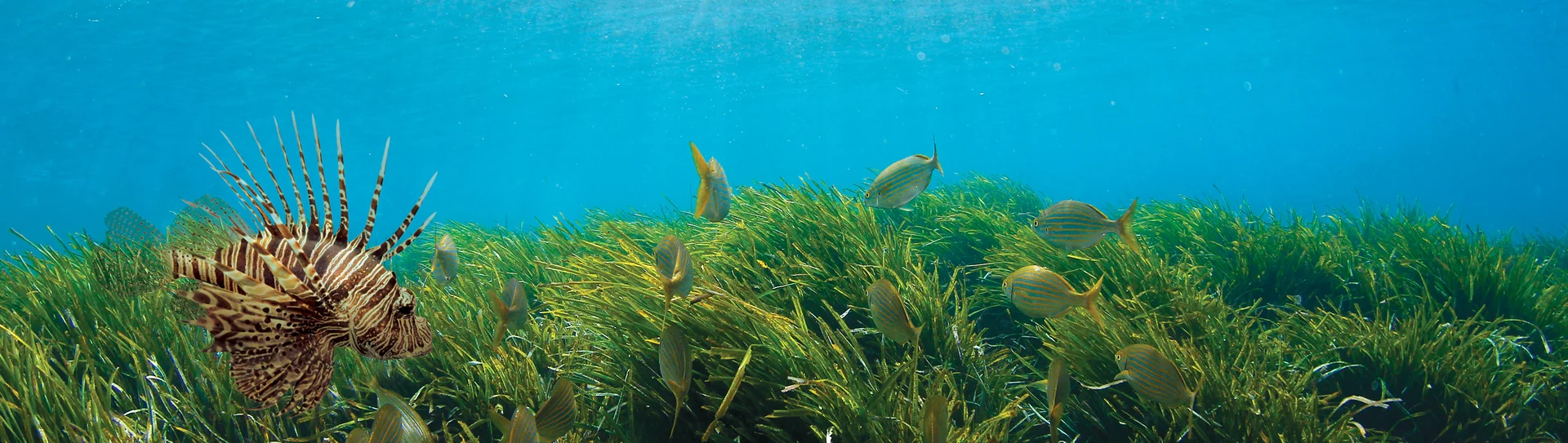
Blue Carbon particularly refers to the carbon that is captured and stored by marine or coastal ecosystems encompassing mangroves, seagrass meadows, and tidal or salt marshes. The coastal blue carbon ecosystems are extremely efficient at capturing carbon from the atmosphere and storing it in plant biomass as well as deep, waterlogged soils that have low oxygen levels. This creates an anoxic sediment environment, which slows down the decomposition process, allowing carbon to remain stored for hundreds to thousands of years. What’s more fascinating about the Blue Carbon is its dual climate function—one that mitigates emissions and the other that improves resilience. Beyond sequestering carbon, this ecosystem helps protect coastlines from soil erosion, supports marine biodiversity, buffers storm surges, and sustains local economies. It is interesting to note that over time, as per the Intergovernmental Panel on Climate Change (IPCC), mangrove forests alone store up to 10 times more carbon per hectare than terrestrial forests due to their deep soil storage ability. Moreover, according to the World Bank’s Changing Wealth of Nations report, mangrove ecosystems protect over 6 million people from flooding every year and prevent losses of $24 billion in productive assets. However, because of unsustainable land use, pollution, and coastal development, we are losing these ecosystems. During the 20th Century, over 50% of the world’s original salt marshes were lost, as stated by the World Bank. . Hence, the conservation and restoration of these coastal marine ecosystems are not only a biodiversity concern but also a climate urgency.
One of the critical challenges that has persisted all these years is calculating and verifying the complexity of carbon storage in underwater systems. However, recent advancements have closed this gap.
Nowadays, drone technology, high-resolution satellite imagery, AI-based ecosystem modeling, and LiDAR are emerging as the best tools to map, monitor, and model Blue Carbon with more precision. All these tools are backed by rigorous field sampling, such as sediment coring, to measure carbon content and storage rates.
While mangrove MRV (Monitoring, Reporting, Verification) systems are fairly advanced blue carbon calculator, methods for salt or tidal marshes and seagrass meadows are still under development.
Notably, various initiatives such as the UNEP Coastal Carbon Research Coordination Network and the Blue Carbon Initiative aim at standardizing methodologies that are both scientifically sound and operationally effective.
With MRV becoming more advanced, the assimilation of Blue Carbon into carbon markets, corporate disclosures, and climate risk frameworks will become more efficient.
Blue Carbon offers a strategic opportunity to companies that seek high-impact and credible climate and corporate sustainability strategies. It provides a nature-based trajectory to deal with emissions, save biodiversity, and solidify climate resilience. Some sectors, such as infrastructure, tourism, shipping, and consumer goods, are at the receiving end of greater advantages. For instance, a resort chain with beachfront properties may invest in mangrove restoration to protect assets, improve climate resilience, and deliver measurable environmental impact. By incorporating Blue Carbon into ESG strategies, companies enhance climate performance while also unlocking co-benefits like long-term risk mitigation, reputational value, and community engagement.
Restoration of coastal ecosystems produces a plethora of returns, such as flood protection, carbon sequestration, livelihood support, and biodiversity gains.
As per the Global Mangrove Alliance, every $1 invested in mangrove restoration can deliver up to $10 in economic value through avoided damages and improved ecosystem services. Blue Carbon restoration is cost-effective, ready, and scalable, unlike some carbon removal methods that remain unproven at scale.
In countries such as Indonesia, India, the Philippines, and Kenya, restoration projects are already progressing as expected in both carbon capture and socio-economic development.
In addition to that, evolving climate finance tools, such as green bonds, blended finance models, and sustainability-linked funds, are increasingly investing in these projects. For investors and corporate sponsors, Blue Carbon provides a high-integrity solution that supports not just climate but nature and people as well.
Most of the nations have now integrated Blue Carbon into their Nationally Determined Contributions (NDCs) under the Paris Agreement. This movement is a testament to the fact that coastal ecosystems are growing to be known as a critical climate asset. With the help of the IPCC’s Wetlands Supplement (2013), countries can seek technical guidance to integrate these ecosystems into their national greenhouse gas inventories under the United Nations Framework Convention on Climate Change (UNFCCC). A lot of countries, such as Australia, the UAE, Indonesia, Costa Rica, and Seychelles, have already made substantial progress in mapping, valuing, and restoring Blue Carbon ecosystems as a part of their national climate and adoption strategies. Such kind of integration builds an environment that is conducive for public-private association while simultaneously allowing the organizations to align their nature-based and sustainable development goals-based climate actions with their national agendas, further bestowing access upon policy incentives, co-financing, and scalable project pipelines.
The forthcoming decade seems to be very critical for Blue Carbon.
With MRV technologies maturing and becoming more cost-effective, a standardized approach will unleash greater confidence for assimilation into ESG disclosures, voluntary carbon markets, and national inventories.
It is also expected that there will be a growth in investment-grade Blue Carbon projects, backed by evolving tools such as blue bonds, ecosystem-based insurance models, and blended finance.
Governments worldwide will also be playing an integral role. More countries in the future are possibly going to include coastal ecosystems in their climate and biodiversity commitments, therefore aligning with global frameworks like the Kunming-Montreal Global Biodiversity Framework and the Paris Agreement.
On the innovation front, association between research institutions, climate tech companies, and coastal communities will drive more productive restoration methodologies, digital monitoring platforms, and community-based stewardship models.
With Blue Carbon moving from an emerging concept to an operational priority, businesses need trusted partners who can help them navigate the complexity, identify the right opportunities, and align actions with long-term sustainability goals. Cognitud supports companies looking to engage with Blue Carbon through a strategic, informed, and outcome-oriented lens. Here’s how Cognitud adds value:
Opportunity Mapping & Materiality Alignment: Cognitud helps organizations identify where Blue Carbon intersects with their climate risk exposure, value chain vulnerabilities, and nature-related opportunities, ensuring that initiatives are both relevant and scalable.
Stakeholder-Ready Positioning: With increasing scrutiny from investors, regulators, and consumers, Cognitud supports companies in framing their Blue Carbon engagement in ways that are science-aligned, credible, and reputationally sound.
Project Evaluation & Partnership Enablement: Through landscape intelligence and strategic vetting, Cognitud connects businesses with high-integrity initiatives, whether for investment, collaboration, or co-development, while maintaining alignment with global frameworks and UN climate goals.
Strategic Integration into Sustainability Roadmaps: Whether your business is enhancing its ESG disclosures or refining its nature-positive vision, Cognitud ensures Blue Carbon is embedded thoughtfully into broader sustainability and climate transition strategies.
In a rapidly evolving environmental landscape, Cognitud empowers businesses to ‘lead, not follow’ in shaping a resilient and responsible coastal climate future.


Dr. Somnath Hazra
Build actionable plans grounded in your sector’s risks and growth priorities.
Blue carbon is the carbon captured and stored by coastal ecosystems like mangroves, seagrass meadows, and tidal marshes. It is important because it sequesters carbon for centuries, protects coastlines, supports biodiversity, and strengthens climate resilience.
Blue carbon ecosystems capture carbon in plant biomass and waterlogged soils with low oxygen, slowing decomposition and locking carbon away for hundreds to thousands of years.
Rising sea levels, along with coastal development and pollution, threaten mangroves, marshes, and seagrass meadows, making them among the most vulnerable ecosystems in the world.
They provide multiple benefits: carbon sequestration, flood protection, storm buffering, biodiversity support, and livelihood security—making them essential for both local communities and global climate goals.
Protection involves conservation, large-scale restoration, sustainable coastal development, and integrating them into climate goals and finance tools like green bonds and carbon markets.