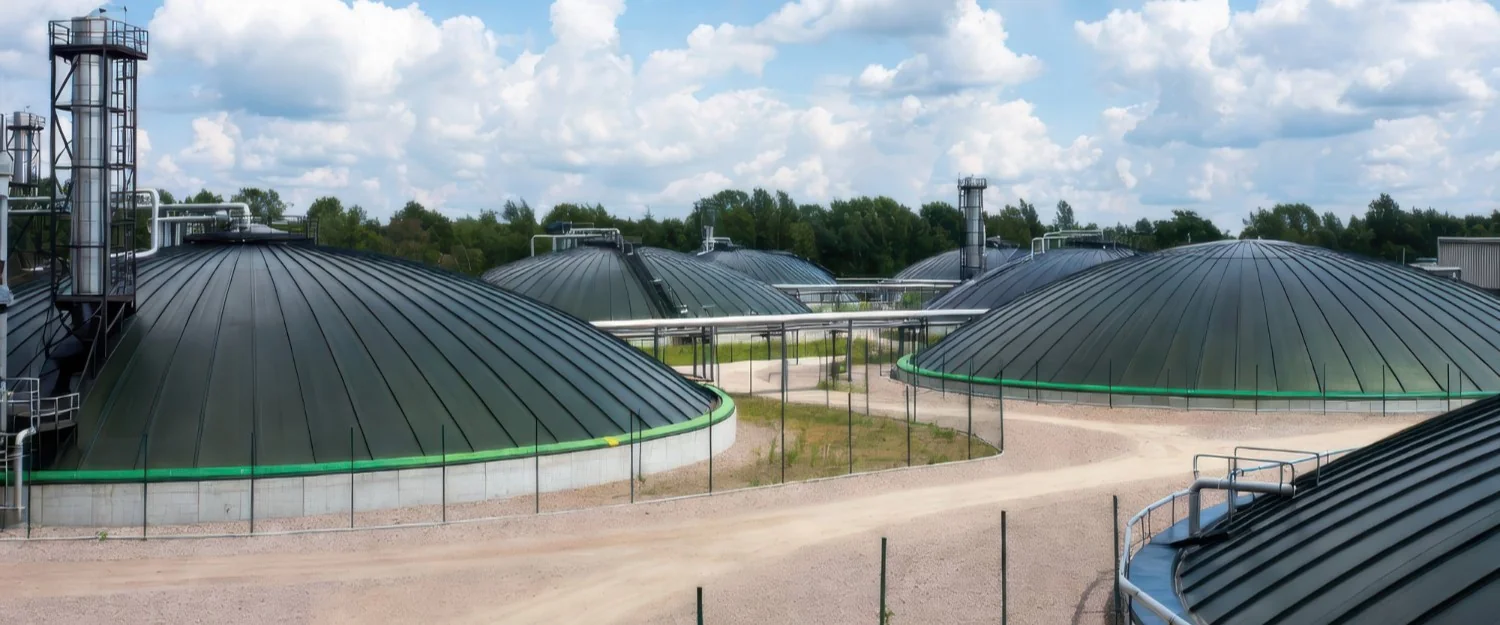
- Government operationalises the ₹23,731-crore GOBARdhan scheme for Compressed Biogas (CBG).
- Eligible producers can receive assured offtake of up to 100% of their CBG output, subject to feasibility.
- A government-backed CBG price of ₹2,110 per million British thermal units will remain in place for at least 10 years.
- The framework includes capital assistance of up to ₹30 crore per CBG project, along with credit guarantee and pipeline infrastructure support.
- The scheme aims to convert agricultural residue, cattle dung, food waste and other organic waste into renewable gas and organic manure.
India has operationalised its ₹23,731-crore GOBARdhan scheme for Compressed Biogas (CBG), introducing a framework designed to provide greater demand and revenue visibility for CBG producers. The operational guidelines issued by the Ministry of Petroleum and Natural Gas cover the period from 2026-27 to 2035-36 and bring together measures covering offtake, pricing, capital assistance, infrastructure and financing support.
Under the new framework, eligible CBG producers can opt for assured offtake of up to 100% of their CBG available for sale, subject to technical and operational feasibility. The gas will be mapped to City Gas Distribution entities or identified CBG clusters for aggregation and injection into trunk pipelines. City gas distributors will also have phased procurement obligations for CBG, beginning at 3% in FY2026-27, rising to 4% in FY2027-28 and 5% from FY2028-29 onwards.
The government has also introduced an administered CBG price of ₹2,110 per million British thermal units, equivalent to around ₹98 per kg at 95% methane content, excluding taxes and compression charges. The price is scheduled to remain in place for a minimum of 10 years, until March 31, 2036, although it may be revised prospectively based on factors including production economics and inflation.
The framework also provides capital assistance of up to ₹30 crore per eligible CBG project. Support is available for new greenfield plants, brownfield capacity expansion and upgrading existing biogas plants to produce CBG, while separate assistance is available for feedstock aggregation and organic-manure value-addition equipment. The scheme also includes credit guarantee support, pipeline infrastructure and a CBG ecosystem challenge fund.
GOBARdhan, or Galvanising Organic Bio-Agro Resources Dhan, is designed to convert cattle dung, agricultural residue, food waste and other organic biomass into products such as biogas, CBG and organic manure. The new framework seeks to address challenges around reliable buyers and project revenues while supporting greater use of organic waste for energy production and strengthening the broader circular economy.
The framework could create opportunities across CBG production, waste-to-energy infrastructure, feedstock management, gas distribution, organic-waste processing and associated engineering and financing activities. Greater visibility around offtake and pricing may also support investment decisions for businesses considering CBG and waste-to-energy projects.
For organisations evaluating CBG and waste-to-energy opportunities, the new framework brings together considerations around feedstock availability, project economics, resource efficiency and circular-economy value creation. Cognitud’s work across energy transition, circular economy and sustainable infrastructure can support these assessments and help businesses align emerging clean-energy opportunities with broader sustainability objectives.