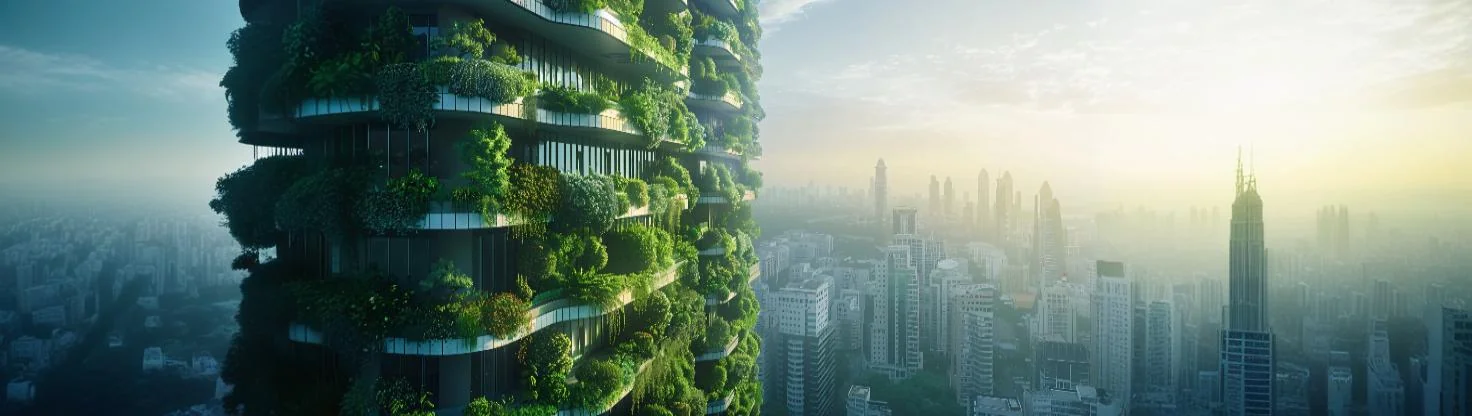
The buildings that do not contribute to greenhouse gas emissions and leave a zero-carbon footprint are referred to as net-zero-carbon buildings.
These buildings prioritize sustainable material selection, integrate life cycle assessment into their development process, and generate as much energy as they consume, therefore establishing a self-sustaining energy system.
Overall, the net-zero building designs are especially created to be energy efficient with the help of highly efficient tools and equipment, HVAC systems, lighting, and insulation, while simultaneously generating renewable energy with the use of wind turbines, solar panels, and geothermal systems.
Due to the increased acidity of the ocean, the ocean chemistry experiences massive changes that adversely affect not just aquatic beings but also the human population.

Enter Subheading para
Since greenhouse gas emissions are drastically increasing, it is sensible to make use of materials that have been obtained from sustainable resources and have a low energy content. Having so is essential since these zero-carbon building materials need less processing, which further indicates that they require fewer resources during the manufacturing process. As a result, it helps avoid damaging our planet any further.
Every building that emits zero carbon adds to the reduction of greenhouse gas emissions to a considerable extent, thus contributing to the betterment of the environment as well as the economy and well-being of individuals. The first and foremost sector that will benefit from zero-carbon buildings is the environment. Carbon-zero buildings will aid in reducing the carbon footprint, therefore promoting environmental sustainability. Being a better choice for the environment since they produce clean energy, zero-carbon buildings will directly support the decarbonization of the economy at large. There are also huge economic benefits to experience from net-zero-carbon buildings. One can expect shorter payback periods, operational cost savings, and a high asset value. As stated by the U.S. Green Building Council (USGBC), building owners witness a 10% or more increase in asset value, thus making the building more valuable. Other than that, the daily expense reduces with each passing year. USGBC also states that sustainable buildings have witnessed about 20% less maintenance costs as opposed to regular commercial buildings, as per a LEED report. With the implementation of zero-carbon building regulations, there would be a prohibition on fossil fuel consumption, which is the causative factor behind poor air quality that severely affects the well-being of children, the elderly, and vulnerable social groups. A report released by Rewiring America states that the outdoor air pollution sourced from residential buildings is responsible for 15,500 premature deaths in the United States every year. It is more astonishing to state that the indoor air has the potential to carry two to five times more contaminants than the outdoor air due to poorly ventilated or fossil-fueled ovens, clothes dryers, heaters, stovetops, and more.
Due to the increased acidity of the ocean, the ocean chemistry experiences massive changes that adversely affect not just aquatic beings but also the human population.
Enter Subheading para
Due to the increased acidity of the ocean, the ocean chemistry experiences massive changes that adversely affect not just aquatic beings but also the human population.
Enter Subheading para
The kind of sustainability strategies a company follows will greatly impact its business in the future. This is why getting it right from the start is necessary, and here is where sustainability consultants of Cognitud can prove to be of utmost importance.
Since our experts have immense experience in their area of expertise, they know how to help a business achieve its goal of a net-zero-carbon building.
With a holistic approach, our sustainability advisors assess the building site, local climate, and available resources to determine the optimal sustainable design strategies that align perfectly with the business’s green construction goals and the general net-zero carbon building frameworks.
They will aid in identifying the existing emission areas in a building and accordingly set clear emission reduction targets while simultaneously drafting a net-zero-carbon building workflow to achieve the desired results.
The highly skilled sustainability consultants of Cognitud are experts in sourcing and planning sustainability solutions as well as evaluating the usage of energy for existing and new buildings in order to easily reach the net zero target.
No matter how complex your business’s carbon footprint is, our proficient sustainability advisors will put their expertise to the best use and make your journey towards sustainability an effortless experience.


Priyanka Mehta
Design structured sustainability pathways aligned with your industry landscape.
A net zero carbon building is one that does not contribute to greenhouse gas emissions and leaves a zero-carbon footprint. It achieves this by being highly energy efficient, using sustainable construction materials, and generating as much renewable energy as it consumes through technologies like solar panels, wind turbines, and geothermal systems.
Zero-carbon buildings are good because they reduce greenhouse gas emissions, improve air quality, and support environmental sustainability. They also provide economic benefits such as lower operational costs, higher asset value, and reduced maintenance expenses, while promoting healthier living conditions.
Achieving a net zero carbon building involves limiting raw material use, adopting sustainable construction practices, avoiding fossil fuels, integrating renewable energy systems, enhancing efficiency with technologies like LED lighting and water-saving fixtures, and conducting life cycle assessments to measure and reduce emissions.
A net zero carbon building balances the carbon it emits with renewable energy generation or offsetting measures, while a zero carbon building eliminates carbon emissions entirely without the need for offsets, typically by using only low-carbon materials and fully renewable energy sources.
To build a zero carbon home, one must use sustainable, low-carbon materials, design for energy efficiency with proper insulation and ventilation, install renewable energy systems such as solar panels, adopt efficient lighting and appliances, and incorporate regenerative practices like rainwater reuse and green roofs.