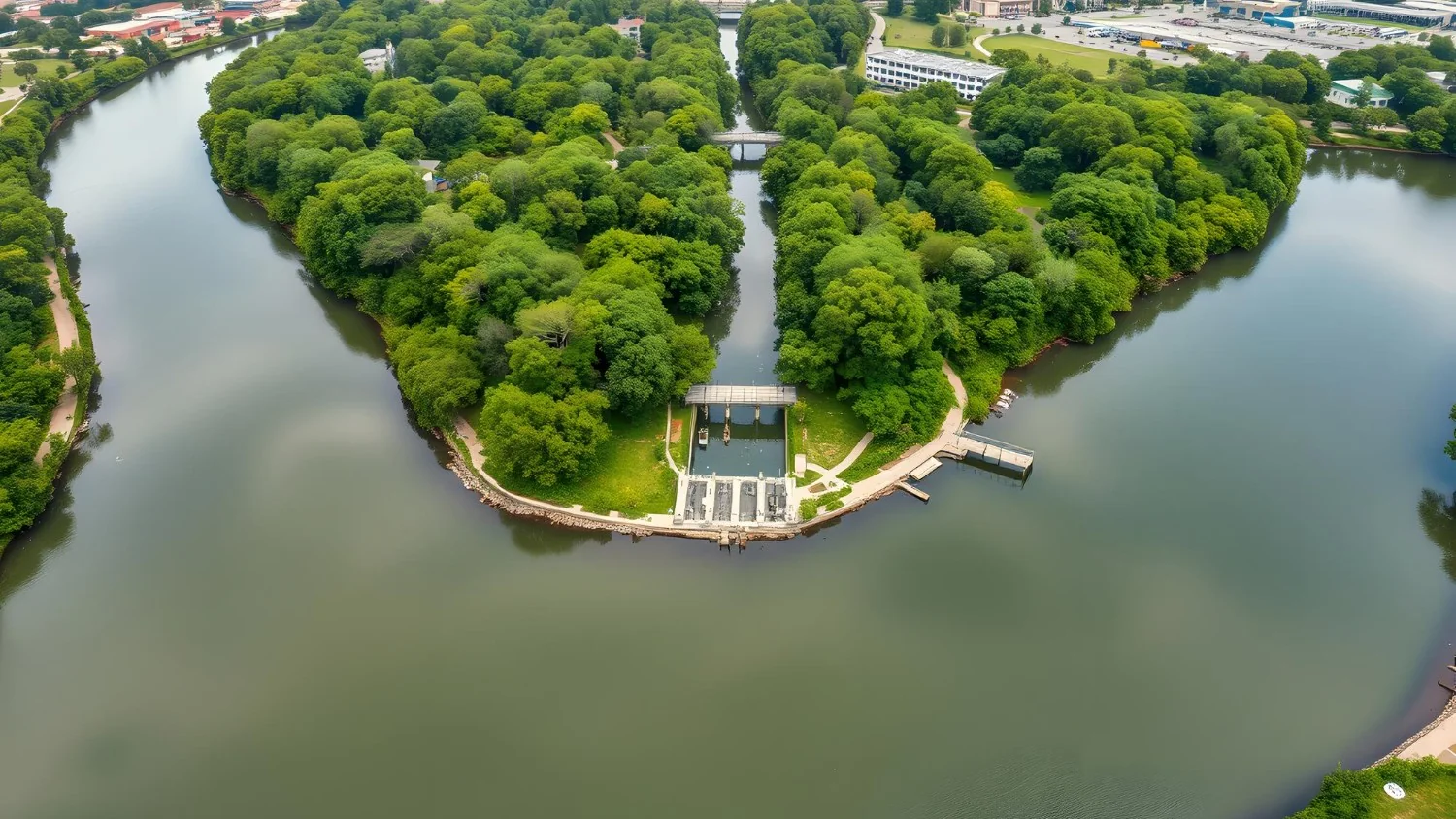

According to the World Bank, climate-related disasters cost low and middle income countries hundreds of billions of dollars annually, with infrastructure damage representing a significant share of these losses. In wealthier nations too, aging infrastructure is unable to withstand modern climate extremes. Bridges built for 50-year flood cycles are now facing those same floods every few years. Power grids designed for moderate seasonal variation are buckling under prolonged heatwaves and unprecedented cold snaps. This is where resilient infrastructure becomes essential—not as an add-on, but as a foundational design principle. Resilient infrastructure refers to systems engineered to anticipate, absorb, recover from, and adapt to disruptive climate events while continuing to function, or restoring function quickly when damage does occur. This includes elevated roadways in flood-prone zones, reinforced power lines capable of withstanding higher wind loads, permeable urban surfaces that reduce flash flooding, and water systems designed for both drought and deluge.
A common misconception is that addressing climate change is solely about reducing emissions. However, climate adaptation and mitigation are two sides of the same coin, and infrastructure planning must account for both. Mitigation focuses on reducing greenhouse gas emissions through renewable energy infrastructure, energy-efficient buildings, and low-carbon transportation systems. Climate adaptation, on the other hand, focuses on adjusting existing and future systems to cope with climate impacts that are already locked in due to historical emissions. Even under the most optimistic emissions scenarios outlined by the Intergovernmental Panel on Climate Change (IPCC), some degree of warming and associated extreme weather is unavoidable in the coming decades. This means infrastructure built today must be designed not just to reduce future emissions, but to survive the climate conditions that are already becoming reality. A well-rounded climate adaptation strategy integrates both elements: lowering long-term climate risk while strengthening immediate physical resilience.
Infrastructure resilience is not purely a technical or engineering issue; it directly determines whether climate resilient communities can thrive or struggle in the face of disaster. When critical systems fail, the consequences cascade quickly. A flooded substation doesn't just cut power; it can disable hospitals, water pumping stations, and communication networks simultaneously. Similarly, wildfire-damaged transportation corridors can cut off entire towns from emergency response and supply routes for days, compounding the original disaster with secondary crises. Communities with resilient infrastructure recover faster, experience fewer casualties, and face significantly lower economic disruption after extreme weather events. Government bodies such as the United Nations Office for Disaster Risk Reduction (UNDRR) and national agencies like the U.S. Federal Emergency Management Agency (FEMA) have repeatedly emphasized that investing in resilience before disasters occur is far more cost-effective than post-disaster rebuilding. Studies cited by FEMA suggest that every dollar spent on hazard mitigation can save several dollars in future disaster recovery costs, a ratio that underscores why proactive planning is not just environmentally responsible but financially prudent.
Urban planners, governments, and organizations across sectors are increasingly recognizing that climate resilient infrastructure must be embedded into long-term development strategies rather than treated as a separate sustainability initiative. This includes diversifying energy sources to reduce grid vulnerability, incorporating green infrastructure like urban wetlands and tree canopies to manage stormwater and reduce urban heat, and using climate projection data rather than purely historical data when designing new construction. International frameworks, including the Paris Agreement and the UN Sustainable Development Goals, explicitly call for resilient infrastructure as part of global climate action. Many national governments have begun integrating climate risk assessments into infrastructure permitting and funding processes, signaling a broader shift toward resilience-first planning. The transition toward climate-resilient systems also creates tangible economic opportunities. Demand is growing for structural engineers who specialize in climate-adaptive design, urban planners trained in flood and heat modeling, and materials scientists developing more durable, weather-resistant construction inputs. Far from being a cost burden alone, resilience investment can stimulate innovation and open new, specialized career paths tied directly to long-term infrastructure stability.
The choices made today will shape how infrastructure, communities, and economies respond to future climate pressures. Cognitud’s ESG consultants supports organizations, governments, and development stakeholders in evaluating climate-related risks, identifying adaptation priorities, and integrating sustainability considerations into planning and decision-making processes. Through climate risk assessments, impact assessments, ESG advisory, and sustainability strategy services, Cognitud helps clients make more informed decisions that support long-term development goals while preparing for a changing climate landscape.


Nilanjana Bhowmick
Position your organization with strategies built around your industry realities.