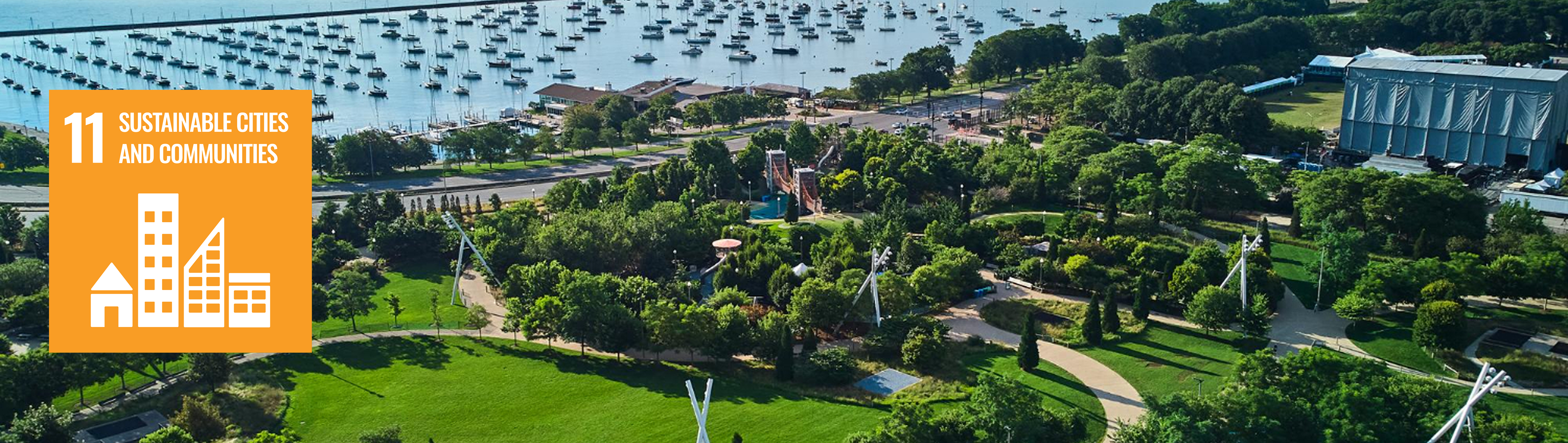
The United Nations’ Sustainable Development Goal 11 is all about making cities and human settlements inclusive, safe, resilient, and sustainable. It is a call for smarter, greener, and more equitable urban planning that benefits everyone from slum dwellers to daily commuters. SDG 11 outlines 10 targets aimed at improving urban life. These include ensuring access to affordable housing and transport, enhancing urban resilience to disasters, protecting cultural and natural heritage, and reducing the environmental impact of cities especially air quality and waste management. The goal also focuses on inclusive urbanization and sustainable land use planning. To monitor progress, SDG 11 includes 15 indicators. These track crucial aspects such as the proportion of the urban population living in slums, air pollution levels, public transport access, urban green space per capita, and disaster risk reduction strategies. Together, these indicators help determine how well cities are serving their people today and preparing for tomorrow.
Targets | Indicators |
|---|---|
| 11.1 Ensure that everyone has access to adequate, safe, and affordable housing and essential services by 2030. e slums and informal settlements. | 11.1.1 Percentage of urban population living in slums, informal settlements, or inadequate housing |
| 11.2 By 2030, provide access to safe, affordable, and sustainable public transportation for all especially vulnerable groups. | 11.2.1 Percentage of population with convenient access to public transport (disaggregated by sex, age, and disability) |
| 11.3 Promote sustainable urbanization and participatory, integrated planning for all human settlements. | 11.3.1: Ratio of land consumption rate to population growth rate 11.3.2: Percentage of cities with regular, democratic participation of civil society in urban planning |
| 11.4 Increase efforts to preserve cultural and natural heritage through public and private investments. | 11.4.1: Per capita spending on heritage preservation by source (public/private) and type (cultural/natural) |
| 11.5 By 2030, reduce disaster-related deaths, economic losses, and disruptions—focusing on vulnerable populations. | 11.5.1: Number of deaths, missing, or affected people per 100,000 from disasters 11.5.2: Economic loss from disasters as % of global GDP 11.5.3: (a) Damage to critical infrastructure (b) Number of basic service disruptions due to disasters |
| 11.6 Reduce per capita environmental impact of cities, especially air pollution and waste. | 11.6.1: Percenatge of municipal solid waste managed in controlled facilities 11.6.2: Annual average levels of PM2.5 and PM10 (population-weighted) |
| 11.7 Provide safe, inclusive green and public spaces for everyone, especially women, children, elderly, and persons with disabilities. | 11.7.1: Percentage of city area that is public open space (by sex, age, disability) 11.7.2: Percentage of people reporting harassment in public spaces (by sex, age, disability, location) |
| 11.a Support economic, social, and environmental integration between urban and rural areas through regional planning. | 11.a.1: Number of countries with urban policies that support balanced development and local fiscal space |
| 11.b By 2020, increase adoption of inclusive climate-resilient urban policies aligned with the Sendai Framework. | 11.b.1: Number of countries with national disaster risk reduction strategies in line with Sendai Framework 11.b.2: Percebtage of local governments with aligned local disaster risk reduction strategies |
| 11.c Assist least developed countries with financial and technical support to build sustainable, resilient buildings using local materials. | No specific global indicator listed yet |

As cities get bigger, it becomes more important than ever to make them inclusive, safe, resilient, and sustainable. By 2050, almost 70% of the world's people will live in cities. This will put a lot of stress on housing, infrastructure, public services, and the environment. If bold, coordinated action is not taken to address this fast and frequently unplanned urbanisation, it might worsen inequities, increase cities' vulnerability to climate change, and undermine current city institutions.
The global housing crisis is also one of the most important problems right now. Somewhere between 1.6 - 3 billion people live without proper housing. They may live in slums, overcrowded apartments, or informal communities that don't have access to basic amenities.
Low-income areas have a higher-than-average burden of housing expenditures since they can't afford it and don't have enough policy support or money. Urban poverty, in turn, makes this cycle of marginalisation worse, pushing vulnerable people to the edges of society and the economy.
The facilities and services that make up the backbone of any sustainable city are also under a lot of stress, not just housing. Many cities still don't have good, cheap public transit, their infrastructure is getting old or isn't good enough, and they have trouble making sure everyone can get to water, sanitation, energy, and waste systems.
Environmental stress makes things even more complicated. Urban areas are responsible for up to 70% of global carbon emissions and are under increasing threat from air pollution, the loss of green spaces, and extreme weather events.
Disasters damage more than 90,000 pieces of important infrastructure every year, making it clearer than ever that cities need to adapt for climate change.
Data and governance are still weak points in reaching SDG 11. Urban problems are always local, yet many city governments don't have the power, money, or planning skills to deal with them well. Integrated urban planning is still not very common, and gaps in data make it hard to keep track of progress and make good decisions.
Without regulations that include everyone and strong monitoring systems, achieving the objective of fair and long-lasting urban communities may become even harder. To make cities that work for everyone, not just the rich, we need to close these inequalities in housing, transportation, infrastructure, environmental resilience, and governance.
To reach SDG11, we need a comprehensive, all-encompassing plan that deals with the growing problems of rapid urbanisation, overburdened infrastructure, a lack of housing, environmental damage, and rising catastrophe risks. The following strategic activities are necessary to really develop cities that are safe, resilient, and sustainable for everyone:

To deal with the expanding number of slum dwellers and the growing gap between rich and poor people in cities, put money into building secure, cheap, and energy-efficient homes. Putting water, sanitation, and electricity at the top of the list of important infrastructure is important for supporting expanding urban populations while also making sure that everyone has basic living standards and dignity.

Urban mobility must be transformed by scaling accessible, low-emission public transit systems and promoting active transport modes like walking and cycling. These efforts reduce congestion, improve air quality, and contribute to inclusive urban access and reduced carbon footprints.

Implement participatory and integrated urban planning that emphasizes social inclusion, cultural heritage, climate-smart development, and access to green public spaces. The use of disaggregated data and digital planning tools ensures that policies reflect real community needs and respond to future growth sustainably.

Cities must build resilience to both natural and human-made disasters. This involves enforcing robust disaster risk reduction strategies, climate-proofing infrastructure, and enhancing early warning systems to safeguard communities and essential services.

Local governments are closest to the challenges and solutions of urban development. Decentralized fiscal authority, stakeholder engagement, and cross-sector collaboration are vital to delivering responsive, place-based urban strategies.

Data-driven planning and digital innovation are crucial to accelerate SDG 11. Investing in urban data ecosystems, open governance platforms, and real-time monitoring enables evidence-based policy, smart infrastructure deployment, and community-led innovations that can scale rapidly.
Achieving SDG 11 is a shared responsibility that demands bold collaboration across governments, communities, businesses, and individuals. National and local leaders must provide inclusive policies and resources, while private sectors must invest in green innovation and responsible urban infrastructure. Civil society and citizens must play an active role in co-creating cities that work for all by demanding equity, protecting the environment, and shaping local solutions.
Whether you're a policymaker, urban planner, builder, commuter, or resident, your choices shape the city’s future. Advancing the Sustainable Development Goals requires united action at every level. Only by working together can we turn our urban spaces into engines of opportunity, sustainability, and resilience for everyone, everywhere.
Shipra Jain
Future-proof your organization with sustainability frameworks tailored to your sector.
SDG 11 is one of the United Nations’ Sustainable Development Goals, aiming to make cities and human settlements inclusive, safe, resilient, and sustainable.
Over half the world lives in cities. SDG 11 ensures urban areas can handle growth while improving living conditions, reducing pollution, and enhancing disaster resilience.
It means building places where people can live well without harming the environment, where resources are used wisely, and where everyone feels included and safe.
We can use clean energy, design better public transport, build eco-friendly homes, protect nature, and work closely with local people to understand what they need.
• Environmental – Protecting natural resources • Economic – Ensuring stable and fair economic growth • Social – Promoting equity, inclusion, and community well-being