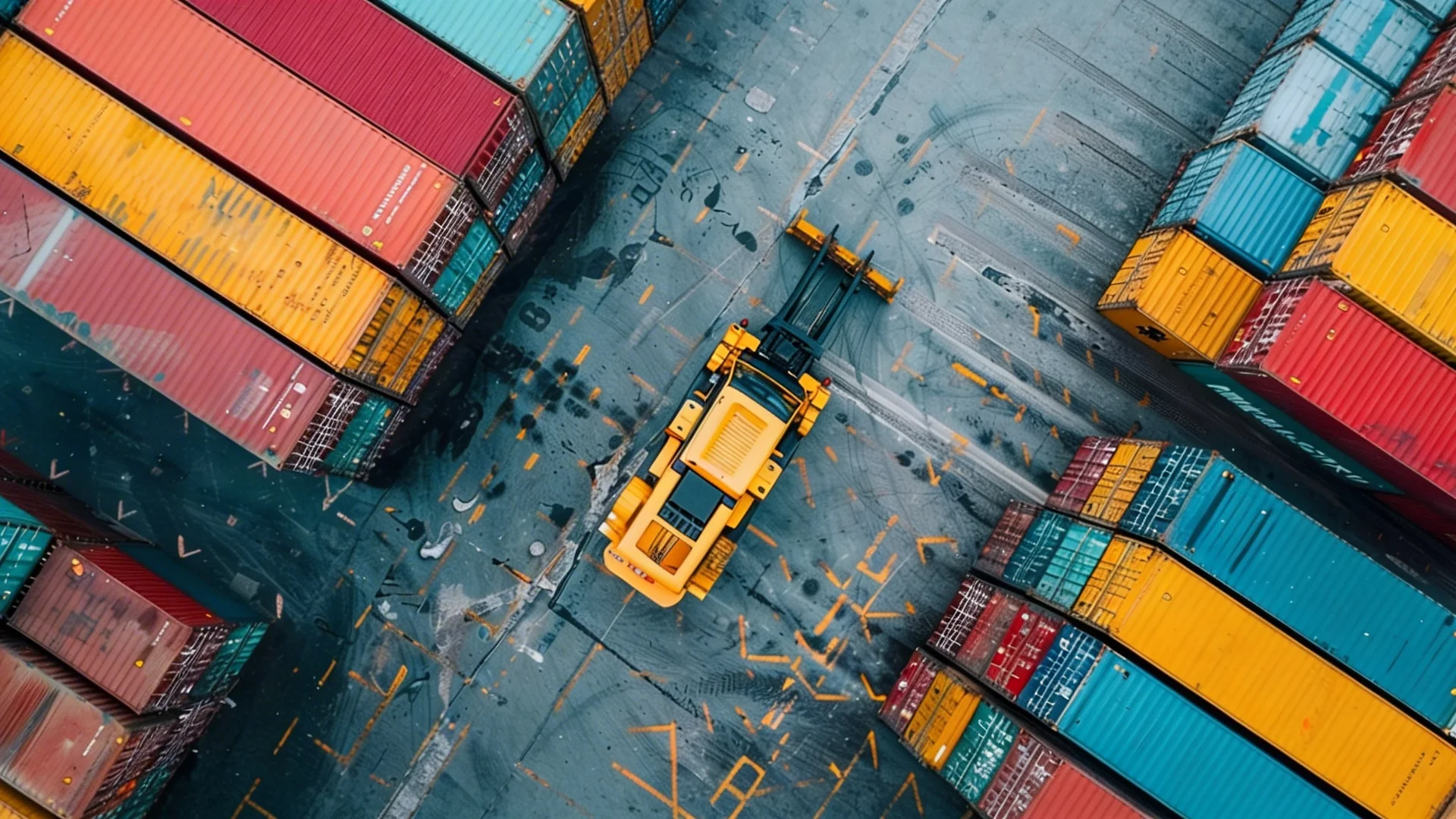

As stated in Climate Action Accelerator, freight accounts for 40% of total transportation emissions. 70% of freight travels by sea, 18% by road, 9% by rail, 2% on rivers, and 0.25% by air. Road freight contributes the largest share through diesel-powered heavy-duty vehicles, while maritime shipping represents a significant portion of international trade emissions via bunker-fueled vessels. Air cargo, though smaller in volume, remains disproportionately carbon-intensive per ton-kilometer. As trade volumes expand, freight emissions risk rising in parallel. E-commerce growth, just-in-time supply chains, and geographically fragmented production networks continue to increase transport intensity. For corporations, this exposure is amplified across value chains. Transport often constitutes a major part of Scope 3 supply chain emissions in sectors such as consumer goods, automotive, pharmaceuticals, energy equipment, and agriculture. Decarbonizing freight is therefore not a side initiative within climate strategy; it is a strategic prerequisite. Without addressing logistics, meaningful enterprise-wide emissions reduction remains materially constrained.
Regulatory pressure reinforces this exposure. In the European Union, the CBAM and the EU Emissions Trading System (EU ETS) are extending emissions accountability across trade-linked sectors, including maritime transport. Fuel standards such as FuelEU Maritime are intensifying lifecycle scrutiny of transport fuels, while parallel carbon-pricing and disclosure regimes are developing globally. Exposure also varies regionally. Electrified rail systems in parts of Europe reduce modal intensity relative to diesel-dominant corridors elsewhere. Long-haul export routes, maritime chokepoints, and urban congestion in high-growth cities further influence carbon intensity across trade flows. Freight’s structural complexity, like multimodal routing, subcontracted carriers, and cross-border regulatory divergence, makes emissions management difficult. Yet this complexity also creates opportunity. Strategic logistics redesign, modal optimization, and low-carbon fuel integration can reduce emissions while strengthening supply chain resilience.
Embedding sustainability into freight operations reframes logistics from a cost center into a strategic lever. Reducing carbon intensity, emissions per tonne-kilometer transported, becomes as important as reducing financial expenditure per shipment. The environmental dimension focuses on decarbonization and energy transition. The social dimension includes driver welfare, safety standards, and community health near logistics hubs. Governance ensures accountability, embedding sustainability targets into oversight structures and executive decision-making. When aligned properly, ESG integration enhances resilience. Fuel efficiency reduces exposure to energy price volatility. Transparent carbon reporting strengthens relationships with customers and investors. Responsible practices improve workforce stability in a sector often challenged by labor shortages. At an enterprise level, ESG integration within freight also influences valuation durability and risk architecture. Logistics emissions increasingly affect transition risk assessments, cost-of-capital assumptions, procurement eligibility, and long-term asset viability. As climate considerations become embedded in financial modeling and enterprise risk management frameworks, freight sustainability performance moves from an operational metric to a strategic determinant of corporate competitiveness. In this way, ESG does not constrain freight systems; it modernizes them.
Scope Definition and Boundary Setting
Freight-related emissions span owned fleets, leased assets, and outsourced transport providers. Effective emissions accounting requires clearly defined operational boundaries aligned with recognized greenhouse gas standards. Many organizations discover that their greatest exposure lies beyond direct control, within contracted logistics services. Understanding this distribution is essential for precise intervention targeting and reducing the overall logistics carbon footprint.
Data Integrity and Digital Infrastructure
High-quality measurement depends on granular fuel data, load factors, route distances, asset utilization rates, and modal differentiation. Digital platforms now enable shipment-level tracking, improving visibility across complex supply networks. A structured measurement approach typically includes calibrated, mode-specific emissions factors; integration of telematics and verified fuel consumption data; real-time load and routing analytics; assurance mechanisms to maintain reporting integrity; and harmonized data architecture across carrier networks. These systems transform emissions data from static estimates into management instruments capable of informing route optimization, modal comparison, and capital planning decisions.
Quantification as Operational Control
Measurement in freight extends beyond disclosure; it enables control. When emissions are linked to specific routes, carriers, and fuel inputs, organizations can model decarbonization pathways, evaluate modal trade-offs, and prioritize interventions based on emissions intensity per tonne-kilometer. Technical precision therefore becomes the foundation of credible transport decarbonization, providing the analytical grounding upon which governance, technology, and market strategy depend.
Accurate data underpins every credible climate strategy. Without reliable quantification, decarbonization efforts risk misallocation of resources and operational inefficiencies.
While measurement defines the problem, technological evolution shapes the solution. Achieving meaningful transport decarbonization requires coordinated innovation across fuels, vehicles, infrastructure, and capital planning. Yet the pathway is neither linear nor frictionless. Each transition lever introduces trade-offs, economic limitations, and timing risks that freight operators must strategically navigate.
Strategic sequencing therefore becomes central to green freight transformation. Organizations must align technology adoption with regulatory signals, infrastructure readiness, and capital depreciation cycles. Decarbonization is not merely a technology choice; it is a portfolio management decision embedded within long-term enterprise strategy.
Sustainable freight transformation depends on durable governance structures embedded at the highest levels of decision-making. Freight decarbonization is capital-intensive and structurally long-term, requiring board-level oversight aligned with multi-decade asset cycles.
Climate exposure in freight is not an operational short-term variable; it is a strategic enterprise risk. Board engagement ensures that decarbonization objectives are integrated into long-term fleet renewal planning, infrastructure investment sequencing, and enterprise risk management frameworks. Oversight structures must connect sustainability targets directly to capital expenditure decisions rather than isolating them within reporting functions.
Embedding emissions performance into executive compensation strengthens accountability across procurement, logistics, and finance functions. Capital allocation decisions, including fleet electrification, alternative fuel contracts, warehouse retrofits, and modal redesign, shape long-term emissions trajectories. Because freight assets depreciate over extended timelines, transition sequencing becomes critical. Governance structures must evaluate technology maturity, depreciation cycles, regulatory horizon scanning, and asset resilience across multiple carbon pricing scenarios.
Effective governance integrates sustainability into capital budgeting processes, risk committees, infrastructure investment planning, and long-term financing strategies. When governance is aligned with capital planning, freight decarbonization shifts from an aspirational commitment to a disciplined investment strategy.
Climate requirements are now integrated directly into procurement structures, reshaping how freight performance is evaluated and contracted. Corporations pursuing net zero strategies are embedding emissions intensity requirements directly into supplier qualification frameworks. Freight operators unable to demonstrate credible decarbonization pathways risk exclusion from long-term procurement agreements and strategic partnerships. Trade-linked carbon mechanisms such as the CBAM are transforming transport emissions into pricing variables influencing landed product cost and cross-border competitiveness. As carbon pricing expands, logistics emissions may materially affect margin structures in trade-exposed sectors. Investor evaluation models are evolving in parallel. Elevated transport emissions can influence perceived transition risk, potentially affecting financing conditions, insurance underwriting, and long-term valuation multiples. In asset-intensive logistics operations, small differences in financing terms compound materially over time. Supply chain ecosystems are stratifying. Carbon-transparent operators gain preferential access to multinational procurement networks, while high-intensity operators face increasing commercial friction. The transition toward green logistics therefore represents competitive repositioning. Those who move early may secure capital advantages, customer loyalty, and market resilience. Those who delay risk commercial marginalization as climate criteria become integrated into global trade architecture.
Freight decarbonization demands integration across measurement systems, technological pathways, and governance architecture. Organizations often possess ambition but lack structural coherence. Cognitud supports freight-intensive enterprises by designing science-aligned transition strategies grounded in operational reality. This includes strengthening emissions accounting systems, enhancing disclosure credibility, and embedding governance mechanisms that connect sustainability performance to executive oversight and capital planning. By aligning climate strategy with logistics operations, Cognitud’s sustainability consultants enable organizations to move beyond compliance and toward long-term resilience. In a world where global trade must evolve within planetary boundaries, structured ESG integration becomes not merely advantageous but essential.


Shipra Jain
Future-proof your organization with sustainability frameworks tailored to your sector.
Freight emissions are the greenhouse gases generated from the movement of goods across supply chains through road, rail, sea, air, and inland waterways. They arise from fuel combustion in trucks, vessels, aircraft, and trains, as well as associated logistics infrastructure, and often constitute a major component of Scope 3 value-chain emissions for multinational enterprises.
Transportation contributes to greenhouse gas emissions primarily through the combustion of fossil fuels such as diesel, marine bunker fuel, and jet fuel. In freight systems, heavy-duty road vehicles, maritime shipping, and air cargo release carbon dioxide and other greenhouse gases per ton-kilometer transported, with emissions intensity varying by mode and fuel type.
Sustainable logistics refers to the integration of environmental, social, and governance principles into freight operations to reduce carbon intensity while maintaining efficiency and resilience. It includes emissions measurement and disclosure, low-carbon technology adoption, modal optimization, governance alignment, and operational redesign to embed climate accountability into logistics systems.
Sustainable shipping is the decarbonization of maritime transport through improved fuel efficiency, adoption of low-carbon fuels such as green methanol or ammonia, lifecycle emissions evaluation, and infrastructure alignment at ports and bunkering facilities. It aims to reduce the climate impact of sea-based freight while sustaining international trade flows.
Transportation emissions can be reduced through accurate measurement and boundary setting, fleet electrification in suitable corridors, adoption of alternative low-carbon fuels for long-haul transport, modal shifts toward lower-emission options such as electrified rail, route and load optimization, digital tracking systems, and governance structures that align capital allocation with long-term decarbonization pathways.