Article




Sustainability reporting provides a comprehensive picture of a specific company’s performance beyond traditional financial reporting to disclose ESG metrics that reflect a company's impact on society and the planet. Regulatory bodies like the Securities and Exchange Commission (SEC) of United States, the European Union (EU), The Financial Conduct Authority (FCA) in the United Kingdom are mandating stricter ESG disclosures . Global initiatives like TCFD and SASB are setting standards for climate-related and industry-specific ESG reporting. This collective push underscores the importance of ESG in achieving long-term business success and societal impact. Sustainability reporting helps in identifying and combatting risk, optimizing costs, and enhancing corporate reputation. Additionally, it enables companies to quantify, evaluate, and manage their operational impact, ultimately strategizing decision-making processes. Investing in robust reporting practices is crucial for long-term success. The Securities and Exchange Board of India (SEBI) introduced BRSR in 2021 and mandated India’s top 1000 listed companies (by Market Capitalisation) to submit the BRSR reports from FY 2022-23. SEBI is proactively spearheading the refinement of ESG reporting standards in India and released the ‘BRSR Core’ framework on July 12, 2023, outlining the assurance and disclosure requirements for the value chain, along with key performance indicators (KPIs) and metrics for ESG reporting. This initiative aligns the ESG reporting in India with global standards.
The evolution of sustainability regulations in India played a crucial role in integrating corporate accountability with sustainability growth.

In 2009, the MCA (Ministry of Corporate Affairs) initiated efforts towards sustainability by issuing National Voluntary Guidelines on CSR (Corporate Social Responsibility) , which was mandated in 2013 for certain companies.
In 2012, SEBI mandated top 100 listed companies by market capitalization to file a BRR (Business Responsibility Report) to disclose social and environmental impacts.
In 2015, 100 listed companies were extended to 500
In 2017, SEBI recommended that the top 500 listed companies voluntarily implement integrated reporting.
MCA published NGRBC (National Guidelines on Responsible Business Conduct) in 2019-20, and BRR was expanded to 1000 listed businesses based on market capitalization.
Later in 2021, SEBI introduced the Business Responsibility and Sustainability Reporting (BRSR) framework as an upgrade to the BRR. This new framework mandates the top 1,000 listed companies to report on ESG metrics as part of their annual reports starting from the financial year 2022-23.
In 2022, BRSR becomes mandatory for top 1000 listed companies which requires a detailed disclosure for ESG, which shows standardized and transparent sustainability reporting.
On 12th July,23, SEBI introduced BRSR Core framework and mandated reasonable assurance for the top 1000 companies by market cap till 2026-27.
Though reporting of BRSR Core KPIs is mandatory for the top 1000 companies since 2023-24, a phased approach is planned for independent assurance of these reports.
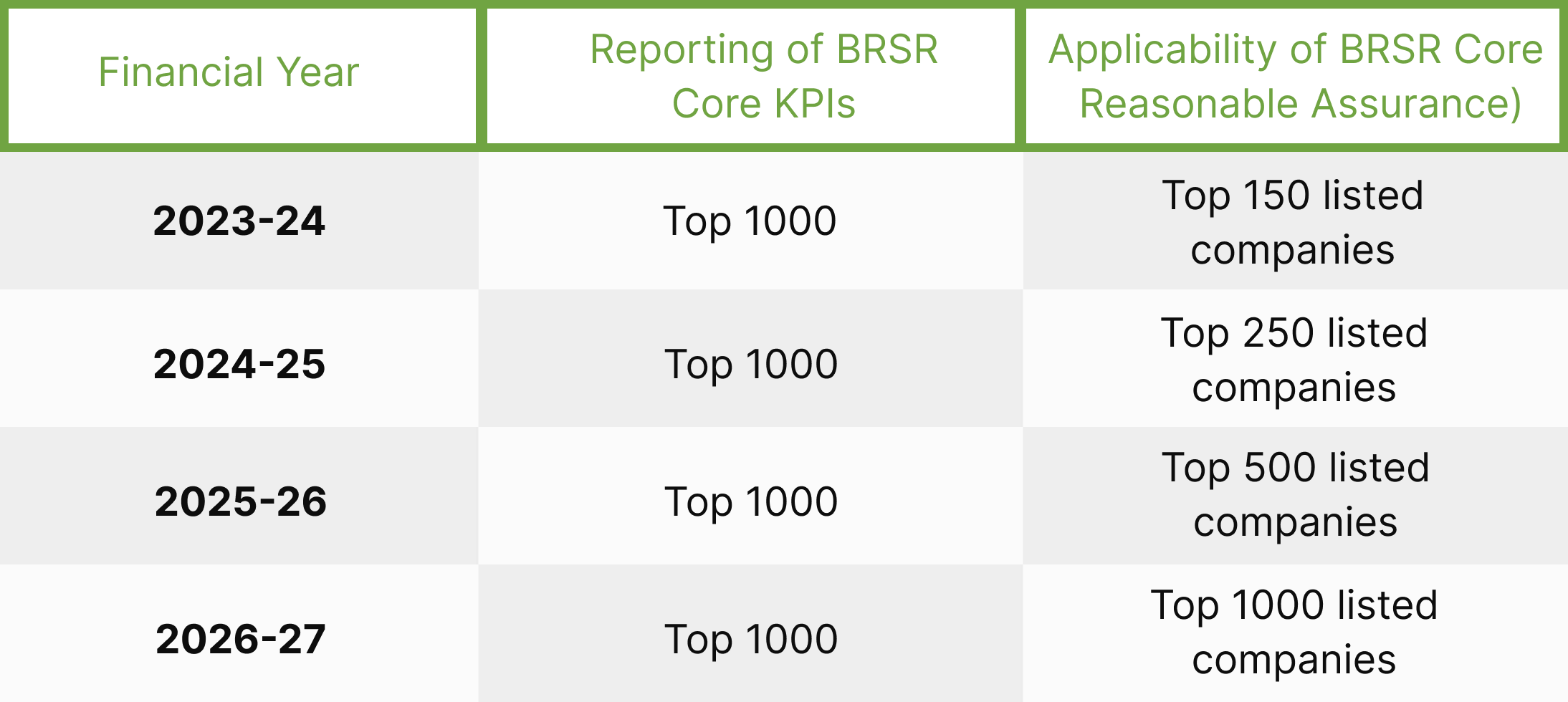
The Business Responsibility and Sustainability Report (BRSR) is an integrated sustainability reporting framework adopted to measure and disclose the Environmental, Social, and Governance (ESG) performance of the organization. It is based on the National Guidelines on Responsible Business Conduct (NGRBC) created by the Ministry of Corporate Affairs (MCA). These guidelines encourage companies to adopt sustainable behaviors corresponding to UN Sustainable Development Goals. It also helps firms to incorporate non-financial measures into the analysis of strategic decisions. It includes the Key Performance Indicators (KPIs) of the existing international frameworks to keep up with the global standards. It concludes that the BRSR is a useful tool for a wide range of stakeholders, such as investors, policymakers, employees, residents, consumers, and suppliers.
Businesses should conduct and govern themselves with integrity, and in a manner that is ethical, transparent, and accountable.

Businesses should provide goods and services in a manner that is sustainable and safe.
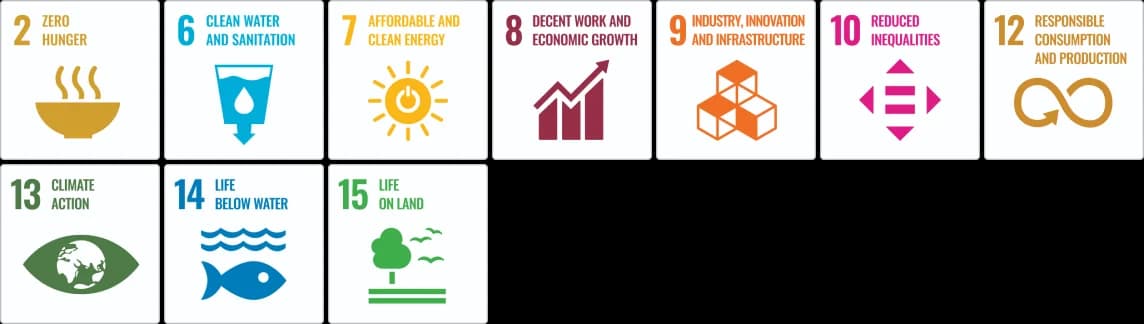
Businesses should respect and promote the well-being of all employees, including those in their value chains

Businesses should respect the interests of and be responsive to all its stakeholders.

Businesses should respect and promote human rights.

Businesses should respect and make efforts to protect and restore the environment.
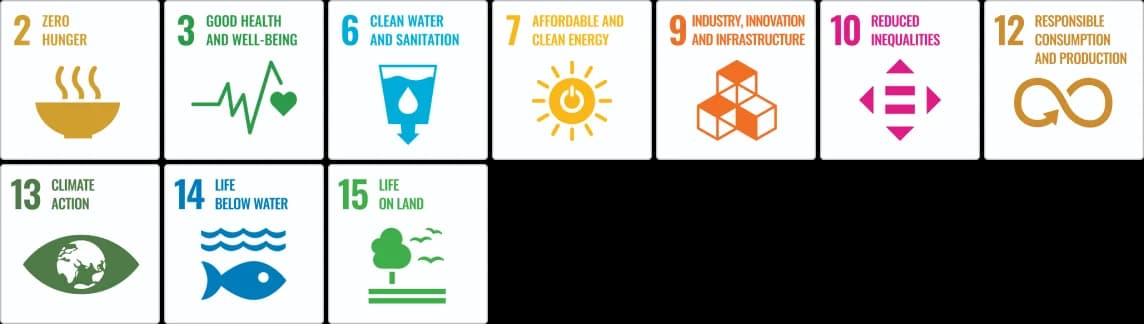
Businesses, when engaging in influencing public and regulatory policy, should do so in a manner that is responsible and transparent.
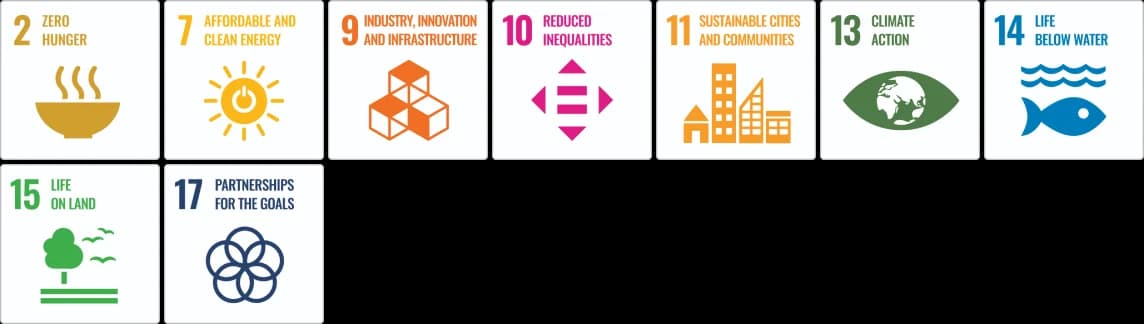
Businesses should promote inclusive growth and equitable development.
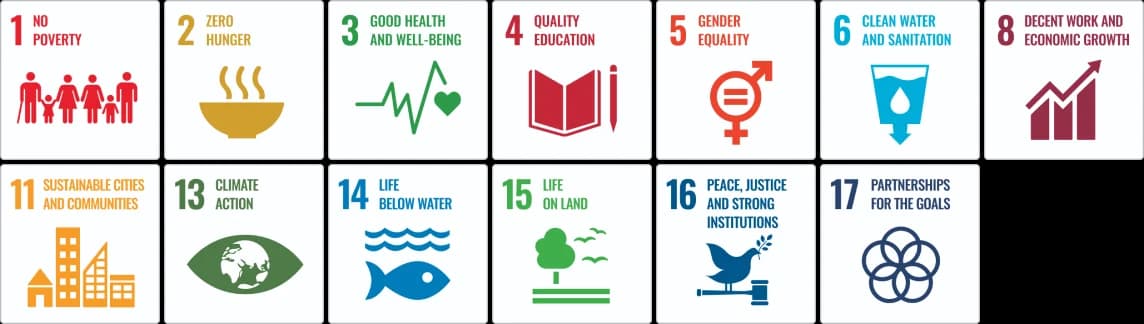
Businesses should engage with and provide value to their consumers in a responsible manner.
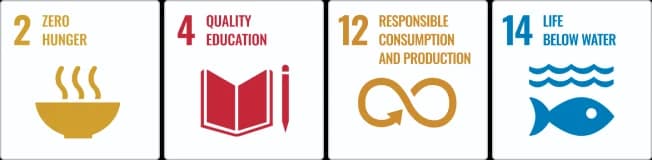
Incorporating BRSR into a business necessitates a multi-dimensional approach that includes:

Conducting a thorough assessment of their current ESG performance, defining the gaps for improvement.
Establishing robust data collection and reporting to track relevant variables.
Engaging with stakeholders, including investors, employees, and customers, to understand their expectations and incorporate their feedback into their sustainability initiatives.
BRSR principles must be incorporated into the strategic planning and management systems of organisations.
It helps to identify and monitor ESG (Environmental, Social and Governance) performance which allows companies to understand the environmental impact, social responsibility, and governance practices through which they can make accurate decisions.
Companies can differentiate themselves from competitors by BRSR reporting, which attract investors to invest in companies
It helps to avoid fines and penalties and maintain a positive reputation
ESG performance allows the company to engage with stakeholders on sustainability issues, which build trusts and credibility for long term relationships
Sustainability reporting enhances a business's reputation by showcasing its responsibility and dedication towards sustainable practices, which attracts and retains more customers, stakeholders and other businesses
The BRSR framework is designed to become a bedrock of India's sustainable business landscape. Its expansion to include value chain partners contributing 2% or more of the company's purchases or sales by value, signifies a foresighted approach to addressing ESG risks and opportunities across the entire value chain.
Since global investors increasingly demand transparency and accountability, maintaining the "comply or explain" model strikes a balance between regulatory rigor and promoting sustainable business practices without excessive bureaucracy. The BRSR framework will intensify focus on materiality and impact in its standardized reporting practice.
India may enhance investor confidence, improve access to capital, and position itself as a global leader in sustainable business practices by focusing on factors such as severity, scope, likelihood, and irreversibility of ESG risks.
Cognitud offers expertise in navigating the complexities of BRSR compliance, empowering businesses to align with sustainability goals, enhance ESG performance, and foster long-term growth through tailored strategies, ultimately strengthening reputation and attracting responsible investors.


Abhigyan Gupta
Advance your strategy with solutions calibrated to your market environment.
BRSR (Business Responsibility and Sustainability Report) is an ESG reporting framework by SEBI that requires India’s top 1,000 listed companies to disclose their environmental, social, and governance performance, aligning with global standards like GRI and TCFD.
BRSR Core, introduced by SEBI in 2023, is a subset of BRSR focusing on key ESG indicators that require third-party assurance. It ensures standardized, credible, and transparent sustainability disclosures across companies and their value chains.
The BRSR framework guides Indian companies in reporting ESG performance using nine principles from the National Guidelines on Responsible Business Conduct (NGRBC), ensuring ethical, sustainable, and stakeholder-driven operations.
BRSR reporting is the process of collecting, analyzing, and disclosing ESG data annually. It helps companies communicate their sustainability performance transparently and enables investors to evaluate long-term impact.
Green Credit in BRSR refers to initiatives that reward companies for positive environmental actions like afforestation, renewable energy use, waste reduction, and carbon mitigation. It allows organizations to showcase their green efforts under the environmental section of BRSR reporting, supporting India’s Green Credit Programme and promoting sustainable business practices.