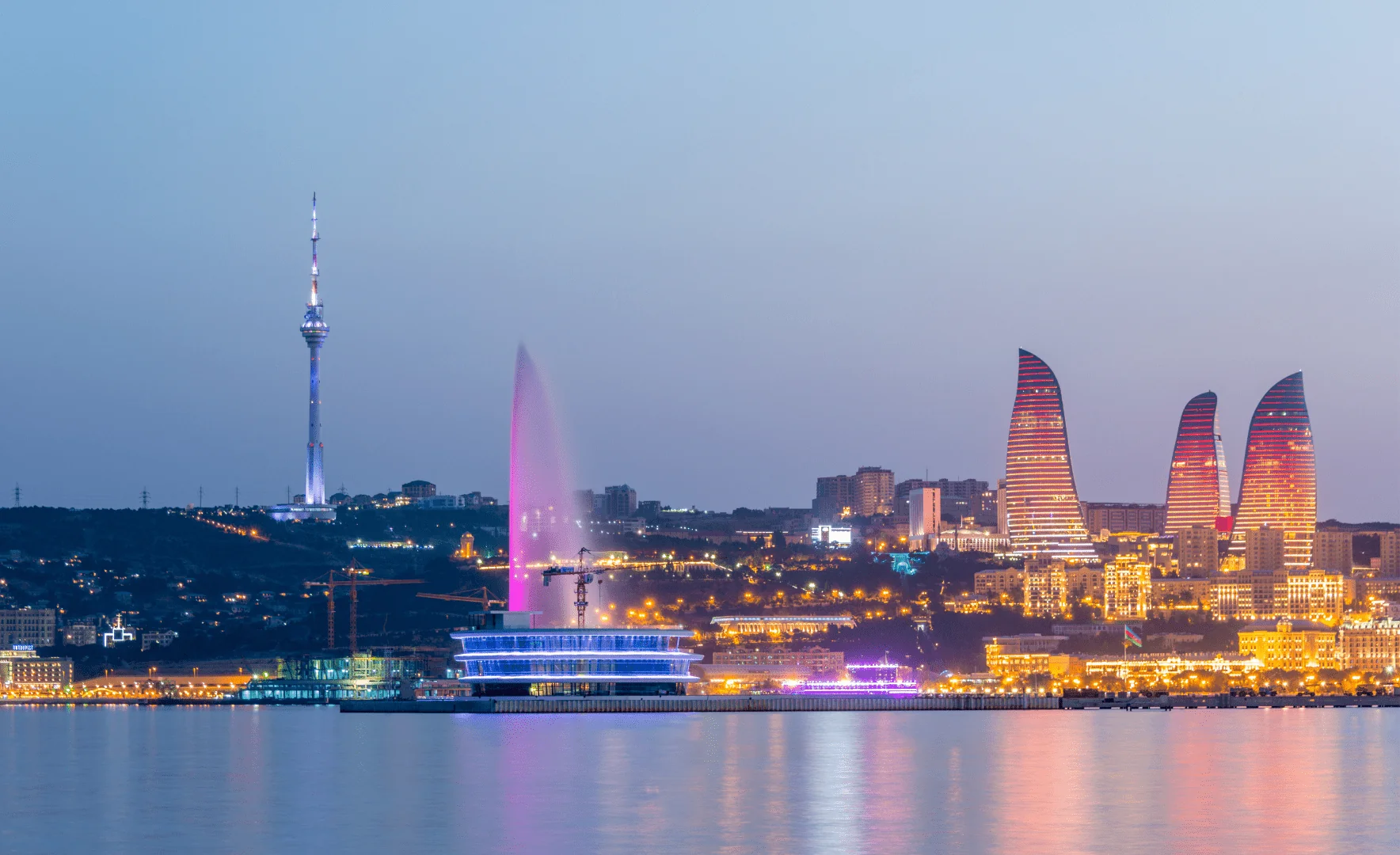
COP29 marked progress in establishing frameworks for carbon credit trading under Article 6 of the Paris Agreement.
These regulations set the stage for both bilateral carbon trading between countries and a global crediting mechanism. The new policy aims to ensure environmental integrity and transparency in carbon markets, potentially attracting investment into developing nations for carbon-reducing projects.

The finalization of Article 6 of the Paris Agreement at COP29 indeed marks a significant milestone for international carbon markets as it allows countries like Andorra, Azerbaijan, Germany, Guyana, Japan, Kazakhstan, the Maldives, the Netherlands, Panama, Singapore, Spain, and Türkiye to lead in transparent climate reporting and participate in the newly operational carbon markets.
30% of the total carbon dioxide released into the atmosphere is absorbed by the oceans of the Earth.
With each passing year, the world witnesses a huge drop in raw materials such as fossil fuels, earth metals, and freshwater, which has set in motion geopolitical conflicts and economic instability.
Circular economy is described as a system where used products never go to waste since they are reused, repaired, refurbished, remanufactured, recycled, and composted.

One of the most critical outcomes of COP29 was the agreement on a new climate finance goal. Developed nations committed to providing $300 billion annually by 2035 to assist developing countries in combating climate change impacts. Though this figure represents a tripling of the previous $100 billion pledge, it fell short of the $1.3 trillion annually that many developing nations had advocated for. Consequently, the agreement has been met with disappointment and criticism from developing countries, which had been advocating for $1.3 trillion annually. India labelled the deal an "optical illusion," while Nigeria and Malawi also expressed dissatisfaction, calling the amount inadequate.
.png)
With each passing year, the world witnesses a huge drop in raw materials such as fossil fuels, earth metals, and freshwater, which has set in motion geopolitical conflicts and economic instability.
Circular economy is described as a system where used products never go to waste since they are reused, repaired, refurbished, remanufactured, recycled, and composted.
30% of the total carbon dioxide released into the atmosphere is absorbed by the oceans of the Earth.
30% of the total carbon dioxide released into the atmosphere is absorbed by the oceans of the Earth.